
Agentic AI governance is the set of controls, policies, and audit mechanisms that keep autonomous AI agents acting within authorized boundaries. It governs what data an agent can reach, what actions it can take, and how each decision is recorded, so an organization can prove after the fact that every agent action was permitted, sourced, and traceable.
| DIMENSION | TRADITIONAL AI GOVERNANCE | AGENTIC AI GOVERNANCE |
|---|---|---|
| Unit of control | A single prompt and response | Chained actions across many tools |
| Human oversight | Reviews each output | Must be enforced inside the system |
| Access model | Static, per application | ABAC evaluated on every hop |
| Audit need | Log of question and answer | Per-action provenance and policy record |
| Primary risk | A wrong answer | An unauthorized or stale action |
What agentic AI governance means
Traditional AI governance was built for models that answer one question at a time. Agentic AI is different. An agent plans, calls tools, queries systems, and chains several actions together to reach a goal, often without a human reviewing each step. That autonomy is the whole value proposition, and it is also the governance problem. When an agent can read a customer record, draft an action, and execute it in seconds, the window for human oversight closes. Governance has to move into the system itself.
Gartner forecasts that 60% of enterprise AI projects will be abandoned through 2026 for lack of AI-ready data. Agents raise the stakes, because they act on that data rather than just summarizing it. Ungoverned agents inherit every weakness of the data and systems beneath them, then compound it across chained steps.
Why agents break traditional governance
Autonomy multiplies risk
A single wrong answer from a chatbot is a contained failure. An agent that misreads a permission, pulls a stale record, or acts on the wrong account can cause real downstream harm before anyone notices. The OWASP guidance on LLM and agentic application risks highlights excessive agency, insecure tool use, and prompt injection as top threats specific to systems that act. Each of these is an authorization and provenance failure, not a model-quality failure.
The audit gap
Most agent frameworks log prompts and responses, but that is not an audit trail a regulator will accept. A defensible record has to show which policy allowed the action, which data grounded the decision, and which version of that data was current at the time. Without that, an organization can describe what an agent did but cannot prove it was permitted. The NIST AI Risk Management Framework frames this as accountability and traceability, two properties that have to be engineered in, not added later.
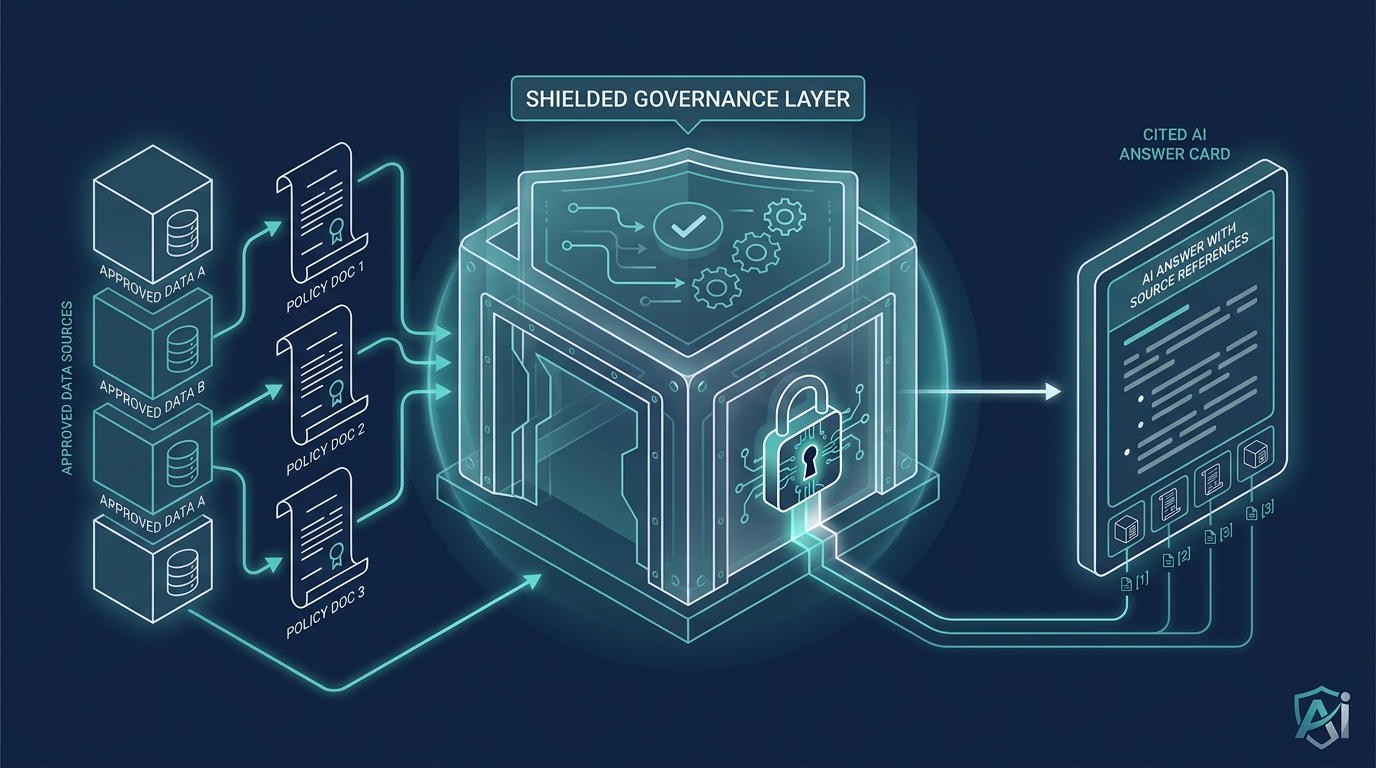
Core controls for agentic AI governance
Effective agentic AI governance rests on three controls that operate at the AI layer, not bolted onto each application. Sovrinty builds these into a governed knowledge layer so that policy travels with every agent action.
ABAC at the AI layer
Attribute-based access control (ABAC) decides, per request, whether a given agent acting for a given user may reach a given piece of data. Enforcing ABAC at the AI layer rather than inside each application means an agent cannot escalate its own access by chaining tools together. Access is evaluated on every hop, so a permission that would be denied to the user is denied to their agent.
Provenance and the Golden Spike audit trail
Every agent action should carry an immutable, per-answer record of the data that grounded it. Sovrinty calls this the Golden Spike audit trail: a verifiable log tying each output to the exact sources and versions behind it. This turns "the agent decided" into "the agent decided based on these records, under this policy, at this time," which is the difference between an anecdote and evidence.
Verbatim enforcement and staleness control
Agents that paraphrase source material introduce drift. Agents that act on outdated records introduce a staleness cascade, where one stale input contaminates every downstream step. Verbatim enforcement keeps agent outputs anchored to approved source text, and staleness controls flag or block records that are no longer current. Together they keep an autonomous system from confidently acting on the wrong version of the truth.
Agentic AI governance in regulated industries
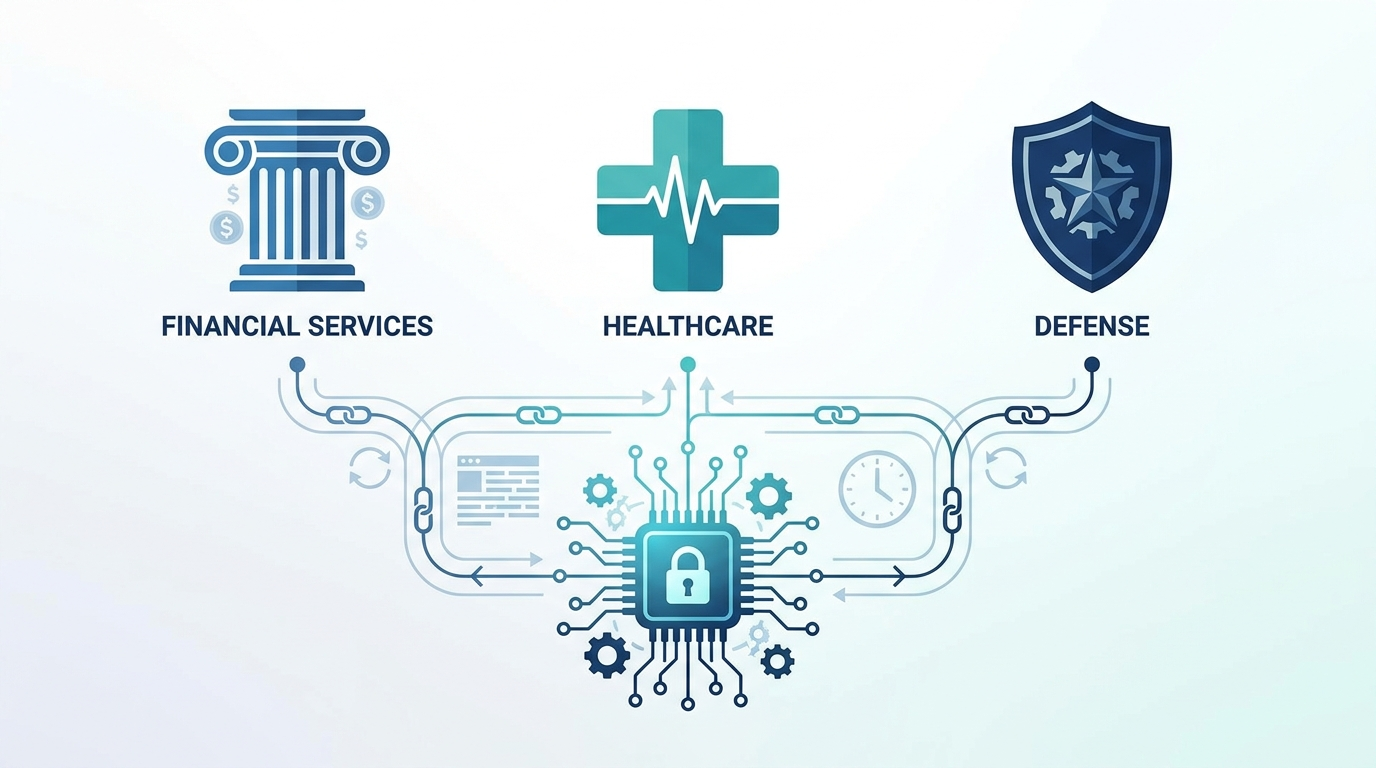
In defense, financial services, and healthcare, an agent that cannot prove its reasoning is a liability, not an asset. The EU AI Act sets penalties of up to EUR 35M or 7% of global turnover for the most serious violations, and its high-risk obligations around logging, human oversight, and transparency map directly onto how agents must be governed. A bring-your-own-model (BYOM) approach lets regulated teams adopt the best model for each task while keeping governance, data residency, and zero-exfiltration guarantees constant across all of them. Governance, not the model, becomes the control point.
If your teams are moving from AI assistants to AI agents, the governance question moves with them: can you prove what every agent did, and that it was allowed? See how Sovrinty governs autonomous agents with provenance you can audit. Book a demo.
FAQ
Common questions
What is agentic AI governance?
Agentic AI governance is the practice of controlling what autonomous AI agents can access, what actions they can take, and how each decision is recorded. It moves oversight into the system itself so agents stay within authorized boundaries and every action is provable.
How is agentic AI governance different from traditional AI governance?
Traditional AI governance secures a single prompt and response, while agentic AI governance must control chained actions across multiple tools with little or no human review at each step. That requires per-hop access control and a per-action audit trail rather than a simple log of questions and answers.
What are the biggest risks of autonomous AI agents?
The biggest risks are excessive agency, insecure tool use, prompt injection, and acting on stale or unauthorized data. Because agents chain actions together, a single authorization or provenance failure can cascade into real downstream harm before anyone notices.
How does access control work for AI agents?
Attribute-based access control (ABAC) enforced at the AI layer evaluates, on every request, whether a specific agent acting for a specific user may reach specific data. Evaluating access on every hop stops an agent from escalating its own permissions by chaining tools together.
Why do AI agents need an audit trail?
AI agents need an audit trail so an organization can prove which policy allowed each action and which data and version grounded it. A per-action provenance record turns "the agent decided" into evidence a regulator or auditor will accept.
How does agentic AI governance support EU AI Act compliance?
The EU AI Act imposes high-risk obligations for logging, human oversight, and transparency, with penalties up to EUR 35M or 7% of global turnover. Per-hop access control and per-action provenance give teams the traceable records those obligations require.


