
An AI readiness assessment is a structured evaluation of whether an organization's data, knowledge, controls, and governance can support AI in production. In regulated industries it measures one thing above all: whether every answer the system produces can be traced to an approved, current, access-controlled source and defended under audit.
| DIMENSION | GENERIC AI READINESS ASSESSMENT | REGULATED AI READINESS ASSESSMENT |
|---|---|---|
| Core question | Is our data accessible and clean? | Is our knowledge approved, current, and access controlled? |
| Success measure | Model accuracy and user adoption | Defensibility of every answer under audit |
| Risk focus | Project failure and wasted spend | Regulatory penalty, license exposure, client harm |
| Evidence produced | Pilot dashboards and usage metrics | Citations, source records, retention evidence |
| Who owns it | IT and data teams | Compliance, risk, and legal alongside IT |
| Failure mode | AI nobody uses | AI nobody can defend |
Why Most AI Readiness Assessments Fail Regulated Teams
The standard vendor questionnaire asks about compute capacity, data volume, integration surface, and staff skills. Those questions matter, but they measure whether you can build something. Regulated teams need to know something harder: whether they can keep it running once a regulator, an internal auditor, or opposing counsel asks where a specific answer came from.
Gartner has been direct about where the failure originates. Through 2026, organizations will abandon 60% of AI projects unsupported by AI-ready data. The same research found that 63% of organizations either do not have, or are unsure whether they have, the right data management practices for AI. The bottleneck is rarely model capability. It is the state of the knowledge the model is asked to reason over.
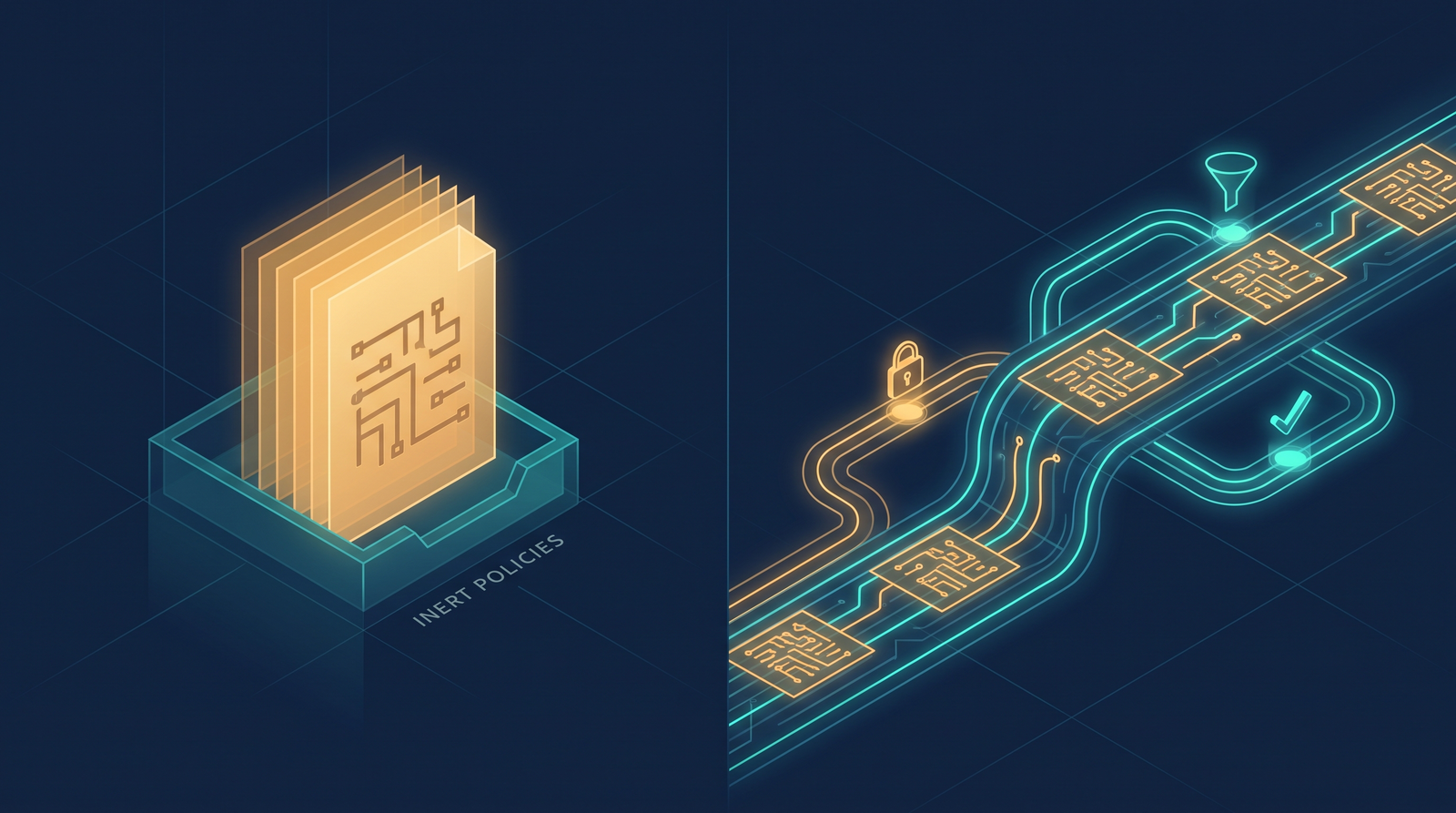
In a bank, a hospital, or a defense supplier, that gap has a second edge. Under the EU AI Act, providers of high-risk systems must ensure those systems automatically record events across their lifetime, and the same regulation carries penalties reaching EUR 35 million or 7% of global annual turnover for the most serious violations. An assessment that never asks whether your knowledge layer can produce that record has skipped the part that decides whether the project survives its first examination.
The Five Dimensions of an AI Readiness Assessment
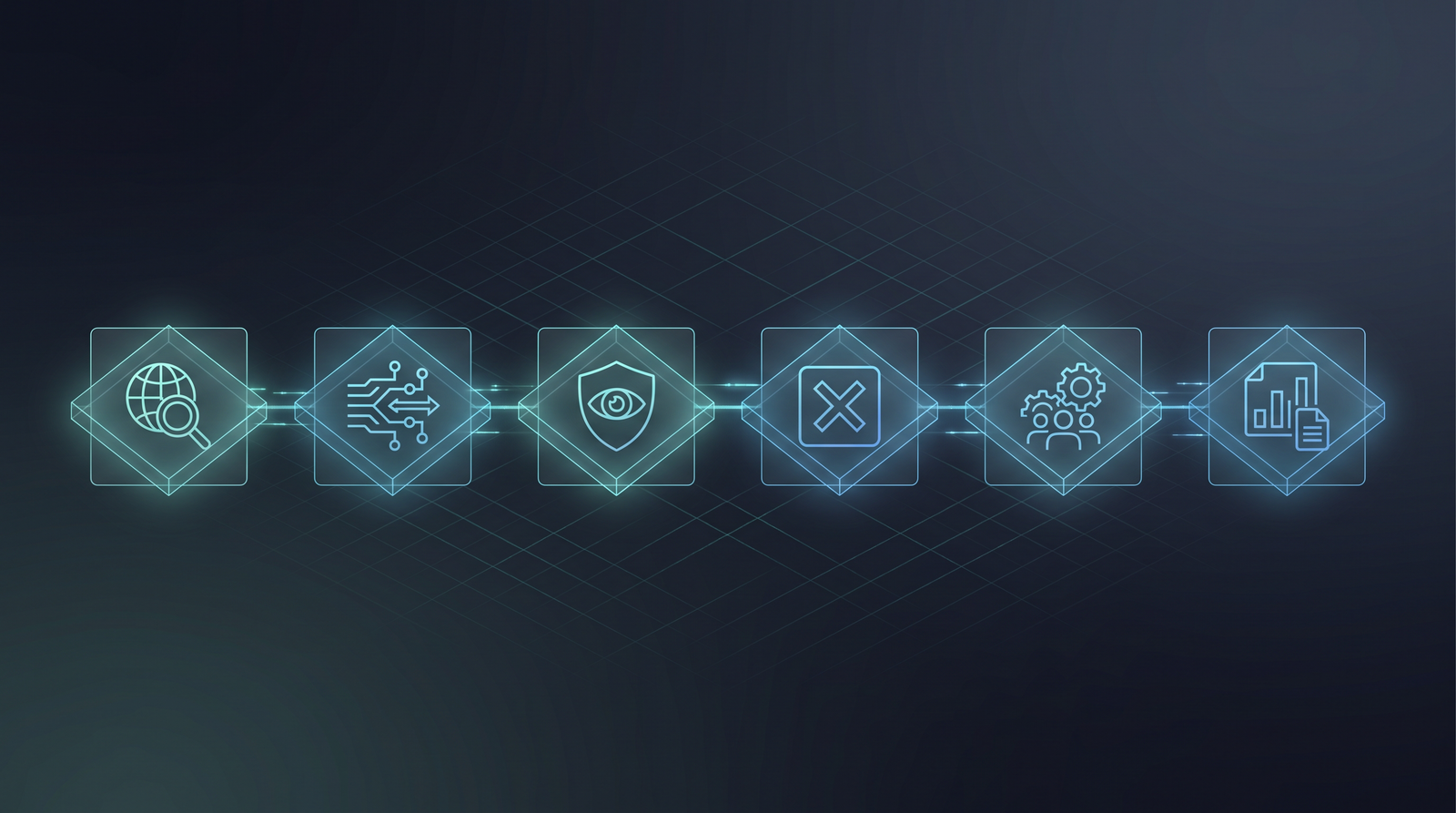
A useful AI readiness assessment framework for regulated work scores five dimensions. The first two are familiar from generic maturity models. The last three are where regulated programs are actually won or lost.
Knowledge readiness
Is the content the AI will draw on approved, owned, and current? Most enterprises discover during assessment that their authoritative material is scattered across shared drives, wikis, ticket threads, and individual inboxes, with no durable record of which version was signed off or by whom. If a person cannot tell you which document is the approved one, a model certainly cannot. This is the practical case for a single source of truth before any model is pointed at the corpus.
Access readiness
Can entitlements follow the answer rather than the document? Traditional file permissions break down the moment a model synthesizes across sources, because the synthesis is a new artifact that inherits nothing. Attribute based access control at the AI layer keeps clearance, jurisdiction, and role attached at the point the answer is assembled, so a user never receives a synthesis drawn from material they are not cleared to see. Treat this as table stakes rather than a differentiator, and score it pass or fail.
Provenance readiness
Can every claim in an answer be traced back to its source? This is the dimension generic assessments skip entirely. Grounding a model on your documents is not the same as being able to demonstrate, months later, which passage produced which sentence. The structural version of this is stricter than a citation footer: answers cite the approved sources they were built from, and sentences that cannot be tied back to an approved source are removed before the answer is served rather than flagged afterwards.
Lifecycle readiness
What happens when the source changes? Knowledge does not fail loudly. A policy is revised, a threshold moves, a product is discontinued, and the old answer keeps circulating because nothing forced it out. Assess four specific mechanisms: whether knowledge expires on a defined schedule and is pulled from circulation automatically, whether content hashes surface drift when an underlying document changes, whether stewards can record that one item supersedes another, and whether citations carry a stale flag once the source has moved on. If the honest answer to all four is that someone is supposed to remember, the dimension fails.
Oversight readiness
Who is accountable, and can they prove they acted? Map named owners to content domains, define the escalation path when an answer is challenged, and confirm the review decision is captured in the system rather than in a meeting someone remembers. The NIST AI Risk Management Framework treats this as the Govern function, and it is the dimension most often present in policy and least often visible in the running product.
How to Run an AI Readiness Assessment
1. Scope by use case, not by department. "Are we AI ready?" has no answer. "Can we let underwriters ask this system about policy exclusions?" does.
2. Inventory the knowledge, not the storage. List the questions the use case must answer, then trace each one to the document that authoritatively answers it and the person who owns that document. Gaps surface fast.
3. Test provenance on real questions. Take twenty questions from actual work, run them, and ask a reviewer to trace each sentence to a source. Score the percentage that survive tracing, not the percentage that sound right.
4. Check the expiry path. Change a source document in a controlled test and observe what happens downstream. If nothing happens, you have found your highest-priority remediation.
5. Score against evidence, not intent. A dimension passes when someone can produce the artifact on request. Policy documents describing an intended control are not evidence that the control runs.
6. Rank remediation by regulatory exposure. Fix the gap that would be hardest to explain to an examiner first, not the one that is cheapest to close.
What a Passing Score Looks Like
Scoring is only useful if each level is anchored to something observable. The table below gives the two ends of each dimension so reviewers converge rather than negotiate.
| DIMENSION | NOT READY | READY |
|---|---|---|
| Knowledge | Authoritative content is informal and unversioned | Every source has a named owner and an approval record |
| Access | Permissions sit on documents only | Entitlements are enforced where the answer is assembled |
| Provenance | Answers are plausible but unsourced | Every claim carries a citation to an approved source |
| Lifecycle | Content goes stale silently | Knowledge expires and is pulled from circulation |
| Oversight | Governance lives in policy documents | Review and supersession decisions are recorded in system |
Common Failure Signals
Four signals show up repeatedly in assessments across defense, financial services, and healthcare. The team cannot name the owner of a critical document. Two departments hold contradictory versions of the same policy and both are in use. Nobody can say when a given source was last reviewed. And the pilot is judged on how good the answers sound rather than on whether a reviewer could defend them line by line. Any one of these means the assessment should return a remediation plan, not a green light.
Readiness Is a Property of Your Knowledge, Not Your Model
Models will keep improving and keep getting cheaper to swap. The corpus underneath them will not improve on its own. That asymmetry is why an AI readiness assessment aimed at infrastructure ages badly while one aimed at knowledge governance keeps paying out, and it is why management system standards such as ISO/IEC 42001 put process and accountability, not tooling, at the center. Score the knowledge, fix what fails, and the model choice becomes a preference rather than a bet.
If your assessment surfaced gaps in provenance, lifecycle, or oversight, those are the gaps Sovrinty is built to close. Book a demo and bring twenty real questions from your own work. We will trace the answers with you.
FAQ
Common questions
What is an AI readiness assessment?
An AI readiness assessment is a structured evaluation of whether an organization's data, knowledge, controls, and governance can support AI in production. In regulated industries it focuses on whether every answer can be traced to an approved, current, access-controlled source.
How long does an AI readiness assessment take?
Scoped to a single use case, two to four weeks is typical. Most of that time goes into tracing authoritative sources and their owners, not into technical testing. Assessments scoped across an entire enterprise take far longer and usually produce findings too general to act on.
What should an AI readiness assessment framework measure?
Five dimensions: knowledge readiness, access readiness, provenance readiness, lifecycle readiness, and oversight readiness. Generic frameworks cover the first two well and the last three barely at all, which is where regulated programs tend to fail.
Who should own the AI readiness assessment?
Compliance, risk, and legal should own it jointly with IT. When IT owns it alone, the assessment measures capability to build and misses the evidence requirements that determine whether the system can stay in production.
Is an AI readiness assessment required by the EU AI Act?
No, the EU AI Act does not mandate a readiness assessment by name. It does require risk management, data governance, technical documentation, and automatic record-keeping for high-risk systems, and a readiness assessment is the practical way to find out whether you can meet those obligations before deployment.
How often should we repeat an AI readiness assessment?
Reassess annually and after any material change: a new model, a new regulation in scope, a merger, or a significant expansion of the knowledge corpus. Lifecycle and oversight scores drift fastest, because both depend on human routines that quietly lapse.


