
An AI bill of materials (AIBOM) is a structured inventory of every component inside an AI system: base models, fine tuning datasets, embeddings, retrieval sources, prompts, libraries, and the license attached to each. It extends the software bill of materials idea to cover data and model provenance, so an organization can show exactly what produced a given output.
| DIMENSION | SBOM | AIBOM |
|---|---|---|
| What it lists | Software packages, versions and dependencies | Models, datasets, embeddings, prompts and retrieval sources alongside software |
| Rate of change | Static until the next build or release | Drifts continuously as documents, indexes and fine tunes change |
| License scope | Code redistribution and open source obligations | Training data rights, model terms and ownership of generated output |
| Verification method | Hash of a build artifact | Tracing a specific output back to the sources that produced it |
| Primary audience | Security and engineering teams | Risk, compliance, legal, procurement and auditors |
Why the AI Bill of Materials Became a Board Level Question
Software supply chain transparency already has a decade of precedent. Federal procurement pushed the software bill of materials into the mainstream, and CISA now publishes minimum element guidance that most enterprise vendors follow. AI broke the assumption underneath it. A conventional SBOM captures the packages compiled into a binary, but it says nothing about the model checkpoint the application calls, the fine tuning corpus behind that checkpoint, or the document index the retrieval step draws on. Those are precisely the components that decide what the system says to a customer or a regulator.
Regulation moved from principles to component disclosure
The EU AI Act requires providers of general purpose AI models to maintain technical documentation and publish a sufficiently detailed summary of the content used for training, with penalties reaching EUR 35 million or 7 percent of global turnover for the most serious violations. The NIST AI Risk Management Framework asks organizations to document data provenance and model lineage under its Map and Govern functions. Neither text uses the word AIBOM. Both describe the artifact an AIBOM produces.
Procurement teams ask before they sign
Vendor questionnaires in financial services, healthcare and defense now routinely ask which models are in use, where inference runs, whether customer data touches training, and which sources ground the output. Gartner forecasts that 60 percent of enterprise AI projects will be abandoned through 2026 because organizations lack AI ready data. A meaningful share of those stall at the security and data handling review, not the technical evaluation, because nobody can answer the component question in writing.

What Belongs in an AI Bill of Materials
There is no ratified AIBOM standard yet, though SPDX 3.0 and CycloneDX have both added machine learning extensions that give the format a shape. Regardless of the schema you adopt, three layers have to be covered or the document is decorative.
The model layer
Record the base model identity and version, the checkpoint or weights hash, the provider, the hosting location and jurisdiction, any fine tuning or adapter lineage, the license terms including ownership of generated output, and the evaluation results tied to the exact version deployed. Organizations running bring your own model architectures need this per model, not per vendor, because the same application may route different request types to different engines.
The data layer
Record training and fine tuning corpora, every retrieval index the system queries, the embedding model and its version, the chunking strategy, and the underlying document set with owners, classification levels, effective dates and the contractual or licensing basis for each source. This layer is where most AIBOM efforts quietly fail, because the document set is large, it changes daily, and it is usually owned by a business function rather than engineering.
The application layer
Record system prompts and templates, tool and API integrations, the access control policy governing who can retrieve what, the logging configuration, and the points where a human reviews or approves output. An AIBOM that stops at the model boundary misses the layer where most real world incidents originate.
Where an AI Bill of Materials Usually Breaks
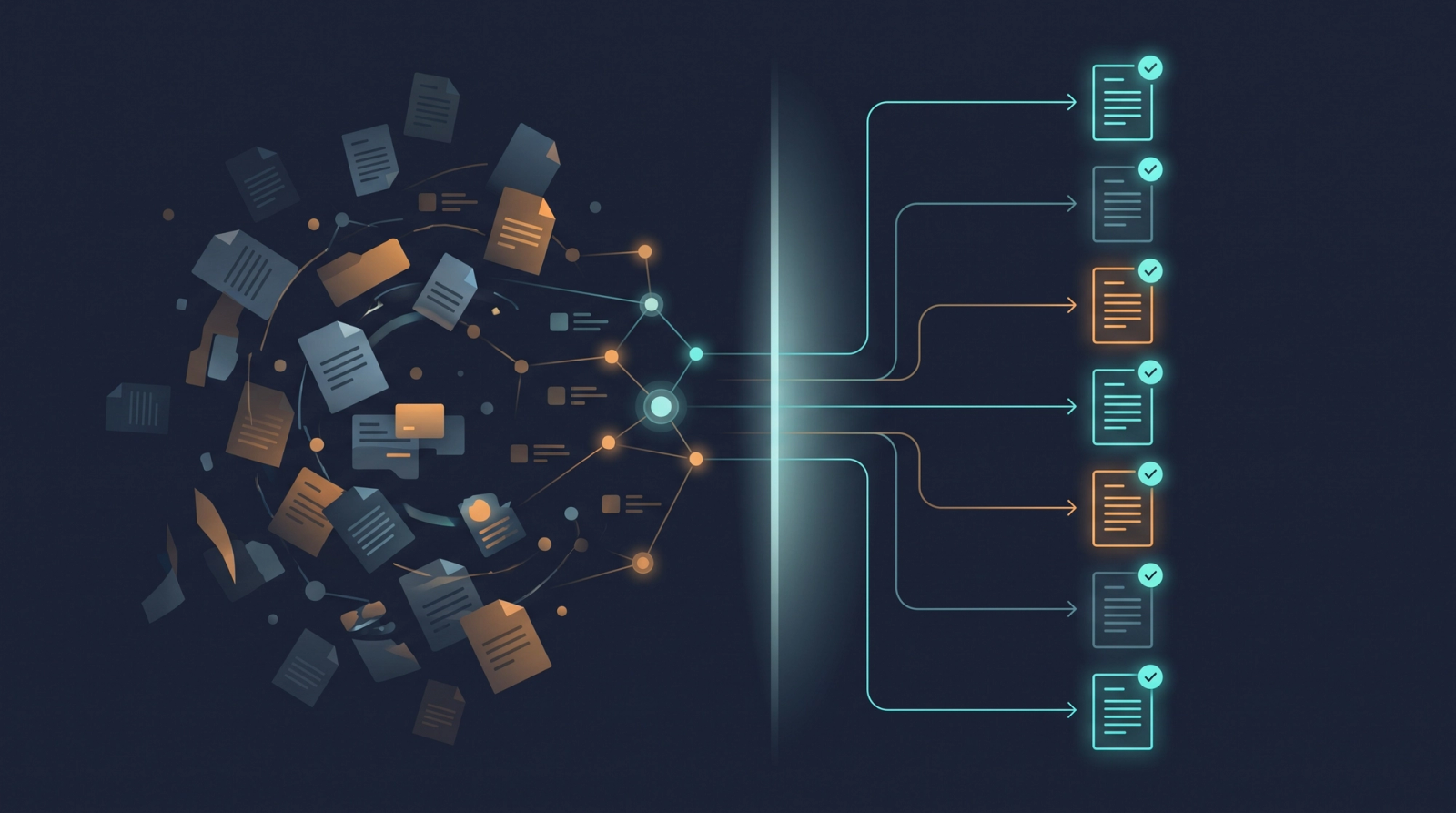
It is a snapshot, and AI systems are not
A spreadsheet compiled during a compliance push describes the system on the day it was compiled. Three months later the index has absorbed thousands of new documents, a provider has silently rolled a model version, and a policy the answers depend on has been superseded. The document is now confidently wrong, which is worse than absent, because it will be handed to an auditor as evidence.
The retrieval index is a blind spot
Teams inventory models carefully and then write one line for the knowledge base. But an answer is shaped far more by which of ten thousand documents was retrieved than by which model phrased it. If the AIBOM cannot name the specific sources behind a specific answer, it cannot support the question an auditor actually asks, which is why the system said this to this customer on this date.
Licenses are recorded once and never rechecked
Model license terms change, open weight releases shift their acceptable use policies, and data supplier contracts renew with new restrictions on derived works. A license field captured at onboarding and never revisited is a legal exposure sitting inside a governance document.
How to Build an AI Bill of Materials That Survives an Audit
1. Generate it, do not author it. Any AIBOM maintained by hand decays at the speed of your release cycle. Pull the inventory from the systems of record: the model registry, the index metadata, the document management layer, the access control policy.
2. Version it alongside the system. Every material change to a model, an index or a prompt template should produce a new AIBOM revision with a timestamp and an owner, so the state of the system on any past date can be reconstructed.
3. Attach ownership to every entry. A component with no accountable steward will not be reviewed, revalidated or retired. Ownership is the field that converts an inventory into a control.
4. Carry effective dates and expiry. Regulatory guidance, product documentation and internal policy all have shelf lives. Recording when a source was approved and when that approval lapses lets the system act on staleness instead of merely reporting it.
5. Connect it to the output. The most useful test of an AIBOM is not whether it lists your components, it is whether you can select any answer the system produced and resolve it back to the exact source revisions that supported it.
Why the Knowledge Layer Decides Whether Your AIBOM Is Real
Model inventory is the tractable half of the problem. The harder half is keeping the knowledge the system draws on accurate, attributed and current. A governed knowledge layer addresses that structurally: answers cite the approved sources they came from, sentences that cannot be traced to an approved source are removed before the answer is served, knowledge that has expired is pulled from circulation automatically rather than waiting on a review cycle, content hashes surface drift when an underlying document changes, and stewards record supersession so citations carry a stale flag instead of silently misleading a reader. For regulated teams in financial services, that turns the AIBOM from a document maintained beside the system into a property of the system itself.
If your next vendor questionnaire or internal audit will ask what is inside your AI system, the honest test is whether you can answer it today without a two week evidence hunt. Book a Sovrinty demo to see how provenance, approval and expiry are enforced at the knowledge layer rather than reconstructed after the fact.
FAQ
Common questions
What is an AI bill of materials (AIBOM)?
An AI bill of materials is a structured inventory of every component inside an AI system, including base models, fine tuning data, embeddings, retrieval sources, prompts, libraries and the license attached to each. It exists so an organization can show what produced a given output.
How is an AIBOM different from an SBOM?
An SBOM lists software packages and versions, which stay fixed until the next build. An AIBOM adds models, datasets and retrieval sources, which change continuously, and it covers data licensing and output ownership rather than only code redistribution terms.
Does the EU AI Act require an AI bill of materials?
Not by that name. The EU AI Act requires providers of general purpose AI models to maintain technical documentation and publish a sufficiently detailed summary of training content, which is functionally the artifact an AIBOM produces. High risk system obligations add further record keeping requirements.
What should an AI bill of materials include at minimum?
At minimum: model identity, version and hosting jurisdiction; fine tuning and adapter lineage; every retrieval index and its underlying document set with owners and effective dates; the embedding model and version; license terms for models and data; and the access control policy governing retrieval.
How often should an AIBOM be updated?
Continuously, not on a quarterly cycle. Any material change to a model version, retrieval index, document set or prompt template should generate a new revision. A hand maintained AIBOM is usually inaccurate within weeks of being written.
Who owns the AI bill of materials inside an organization?
Accountability usually sits with risk or compliance, but the entries have to be owned by the functions that control them: engineering for models and infrastructure, legal for licensing, and business stewards for the documents feeding retrieval. Single ownership without those inputs produces a stale document.
Is there an AIBOM standard format?
No single ratified standard exists yet. SPDX 3.0 and CycloneDX have both introduced machine learning extensions that provide workable schemas, and most organizations extend one of those rather than inventing a format.


