
AI in compliance is the use of artificial intelligence, including large language models, to support regulatory work such as monitoring, reporting, and controls testing. In regulated industries it must run on governed systems that cite their sources and produce audit-ready records, so every AI-assisted answer can be traced, verified, and defended.
| DIMENSION | UNGOVERNED AI | GOVERNED AI IN COMPLIANCE |
|---|---|---|
| Source of answers | Open web plus model memory | Approved, access-controlled sources only |
| Evidence trail | None, or rebuilt after the fact | Citations and records captured when the answer is served |
| Data control | Prompts may leave your environment | Runs in your environment with no exfiltration |
| Staleness | No signal when a source changes | Expired knowledge pulled from circulation automatically |
| Audit readiness | Manual, slow, incomplete | Traceable and defensible on demand |
Why AI in compliance needs governance by design
Compliance leaders are under real pressure to adopt AI, and for good reason: the volume of regulatory change, controls testing, and reporting keeps climbing while headcount does not. The problem is that the same qualities that make general-purpose models fast also make them hard to defend. A model that cannot show where an answer came from is a liability the moment an examiner asks you to prove it.
That gap is not hypothetical. Gartner forecasts that 60 percent of enterprise AI projects will be abandoned through 2026 for lack of AI-ready, governed data. Regulators are moving in parallel. The EU AI Act sets penalties as high as 35 million euros or 7 percent of global turnover for the most serious violations, and frameworks like the NIST AI Risk Management Framework now expect documented traceability rather than good intentions. For compliance, governance is not an add-on to AI; it is the precondition for using AI at all.
Where AI in compliance adds value today
Regulatory monitoring and horizon scanning
AI is well suited to scanning regulatory feeds, rule changes, and enforcement actions, then flagging what applies to your business. The value is not the summary itself but the ability to trace each flag back to the source text, so an analyst can confirm the interpretation instead of trusting a black box.
Controls testing and evidence
Controls testing generates enormous evidence: sampling, exceptions, and remediation notes. AI can draft testing narratives and surface anomalies, but only a governed system lets you show which records and policies informed each conclusion, which is exactly what internal audit or a regulator will ask to see.
Policy and procedure answers
Frontline staff constantly ask what a policy allows. A governed assistant can answer from your approved policies and procedures, cite the exact clause, and decline to answer when the approved sources do not cover the question, rather than inventing a plausible-sounding rule.
The risks of ungoverned AI in compliance
Ungoverned AI fails compliance in two predictable ways. The first is content risk: a model that fills gaps with fluent guesses, or that answers from a policy version superseded months ago. In a regulated workflow, a confident wrong answer is worse than no answer, because someone acts on it.
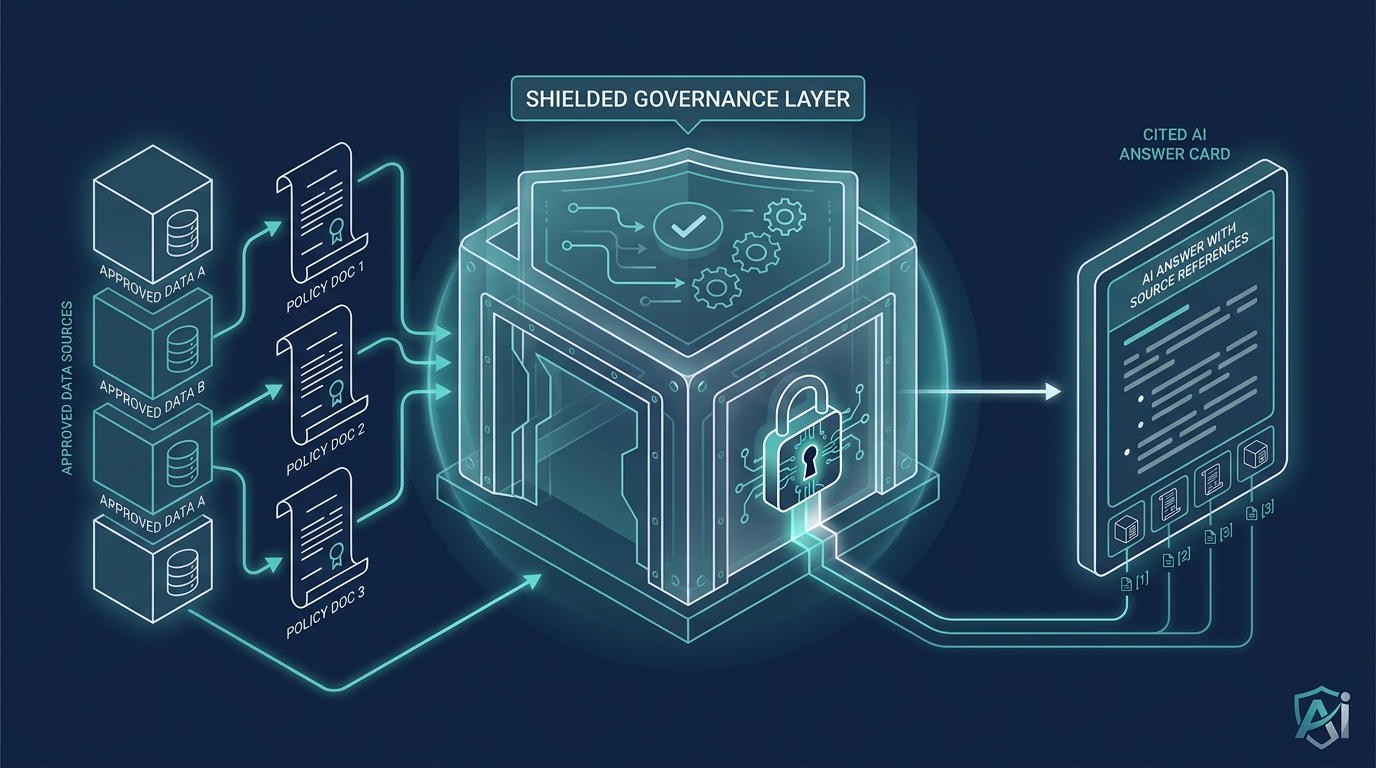
The second is data risk. Sending prompts that contain customer data, deal terms, or case details to an external model can breach data residency and confidentiality obligations before anyone reads the output. Sovereignty and zero-exfiltration controls are table stakes here: the AI has to run where your data already lives, under the same access controls, so attribute-based access is enforced at the AI layer rather than bolted on afterward.
How to deploy AI in compliance you can prove
Deploying AI in compliance you can prove starts with provenance. Every answer should carry its sources, so a reviewer can open the citation and confirm it. Sovrinty builds this into the product architecture: answers are grounded in approved sources, unsourced sentences are removed before an answer is served, and each answer keeps a record you can point an auditor to.
Governance also means staying model-agnostic. Regulated teams should not have to bet their compliance posture on a single vendor's model. A bring-your-own-model approach lets you run the model that meets your risk and residency requirements today and swap it as the market shifts, without losing the governance layer that sits above it.
Finally, governed knowledge has to stay current. Approved sources change, and stale guidance is a compliance failure waiting to happen. Knowledge that expires and gets pulled from circulation automatically, with stale citations flagged, keeps the assistant from answering with a rule that no longer applies.
AI in compliance across regulated industries
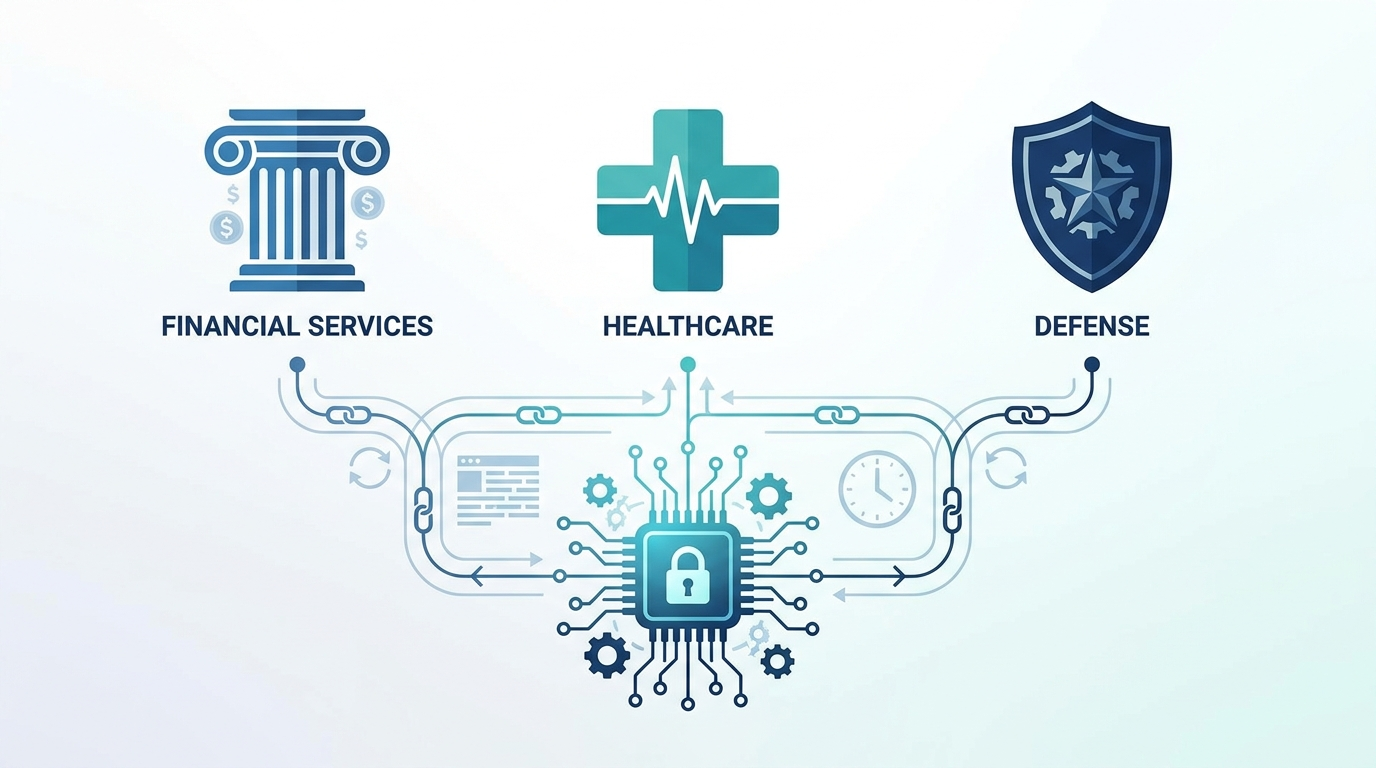
The shape of AI in compliance differs by sector. In financial services, the pressure is transaction monitoring, model risk, and regulatory reporting under close examiner scrutiny. In healthcare, protected health information and consent rules dominate. In defense, classification and data sovereignty are non-negotiable. What unites them is the need to prove, on demand, that an AI-assisted decision drew only on approved, access-controlled information.
If your compliance function is evaluating AI, the deciding question is not how fluent the answers are but whether you can defend them. To see governed, cited AI in a regulated workflow, book a Sovrinty demo.
FAQ
Common questions
What is AI in compliance?
AI in compliance is the use of artificial intelligence to support regulatory work like monitoring, controls testing, and reporting. In regulated industries it should run on governed systems that cite sources and keep audit-ready records.
Is AI safe to use for regulatory compliance?
AI is safe for compliance when it is governed: answers come only from approved sources, are cited, and stay inside your environment. Ungoverned models that guess or send data externally are the real risk.
How does AI compliance software prove where an answer came from?
Governed AI compliance software attaches source citations to each answer and keeps a record of the approved documents used, so a reviewer or auditor can open the citation and verify the answer.
Does using AI in compliance create audit risk?
It can if the AI cannot show its sources or uses stale policies. Governed AI reduces audit risk by grounding answers in current, approved sources and keeping a traceable record of each answer.
What should regulated teams look for in AI compliance automation?
Look for provenance and citations, in-environment deployment with no data exfiltration, attribute-based access control, model-agnostic support, and knowledge that expires automatically when sources change.


