
AI red teaming is the practice of deliberately attacking an AI system to expose failures before adversaries or auditors do. Testers probe models with adversarial prompts, jailbreaks, and edge cases to surface hallucinations, data leakage, bias, and unsafe outputs, then document each weakness so engineering and governance teams can remediate it and verify the fix holds.
| DIMENSION | TRADITIONAL PENETRATION TESTING | AI RED TEAMING |
|---|---|---|
| Primary target | Networks, apps, and infrastructure | Models, prompts, training data, and outputs |
| Attack method | Known exploits and CVEs | Adversarial prompts, jailbreaks, and data poisoning |
| Typical failures found | Breaches and privilege escalation | Hallucination, data leakage, bias, and unsafe output |
| Success measure | Vulnerabilities patched | Behaviors bounded and re-tested |
| Cadence | Point-in-time engagement | Continuous, because the model keeps changing |
What AI red teaming is
AI red teaming borrows its name from military and cybersecurity exercises where an offensive team simulates a real adversary. Applied to artificial intelligence, and especially to generative AI and large language models, the practice means stress testing a model the way a motivated attacker or a demanding regulator would. Instead of scanning for known software vulnerabilities, red teamers craft inputs designed to make the model misbehave: leak confidential data, follow a hidden instruction, produce a confident but fabricated answer, or generate content that violates policy.
Why AI red teaming matters for regulated industries
Teams in defense, financial services, and healthcare cannot treat a large language model as a black box they simply trust. A single fabricated citation, leaked record, or biased recommendation can trigger a regulatory finding, a failed audit, or real harm. Red teaming turns a vague fear of AI risk into a concrete, reproducible list of failures that leaders can act on. Regulators and standards bodies now expect it. The EU AI Act requires adversarial testing and robustness evaluation for high-risk systems, the NIST AI Risk Management Framework treats testing and red teaming as core measurement activities, and the OWASP Top 10 for Large Language Model Applications catalogs the prompt injection and data leakage classes that red teams reproduce every day.
What generative AI red teaming tests
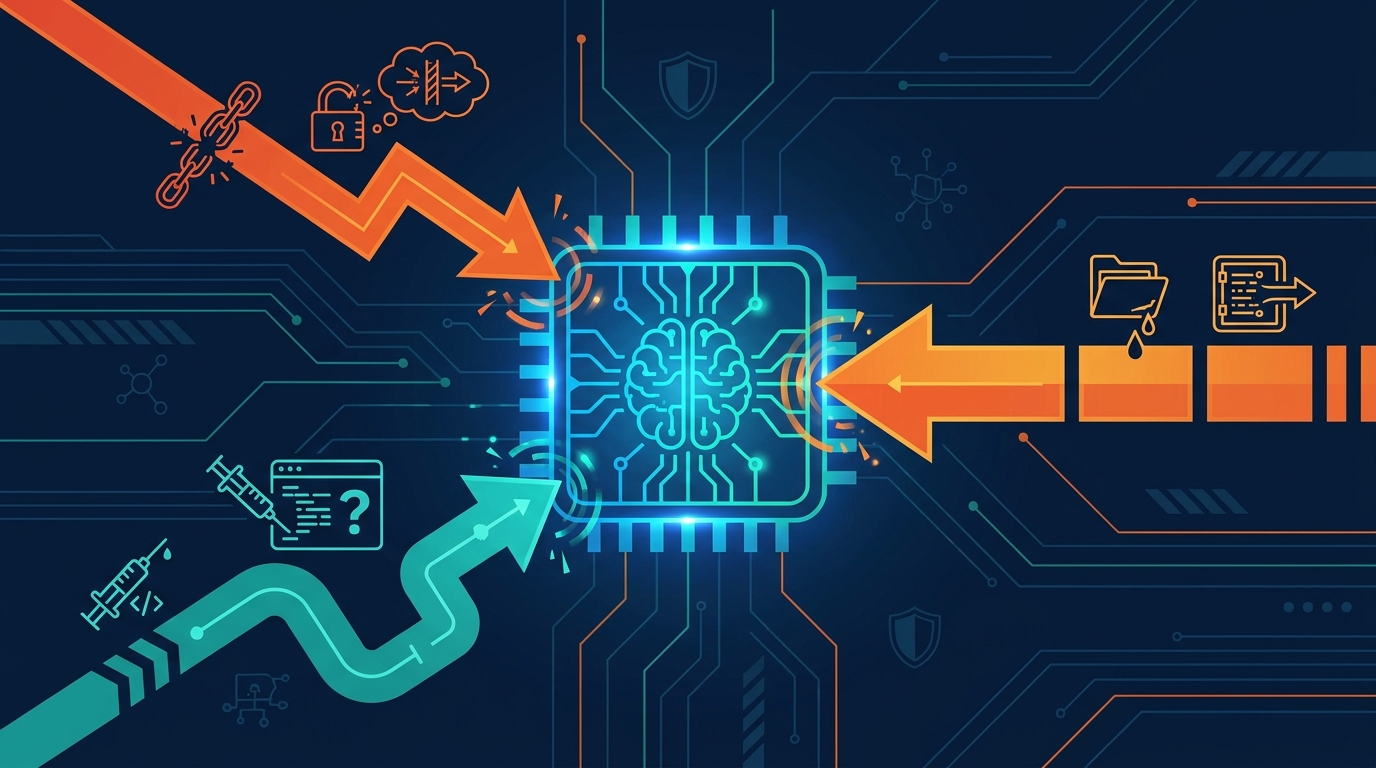
Adversarial prompts and jailbreaks
Jailbreaks use crafted phrasing, role play, or encoded instructions to push a model past its guardrails. A red team measures how easily an assistant can be talked into ignoring its own rules, and how consistently those rules hold under pressure.
Prompt injection and data leakage
Prompt injection hides malicious instructions inside documents, tickets, or web content that the model later reads. Red teamers check whether that hidden text can override system instructions or coax the model into revealing data it should never expose.
Hallucination and unsupported claims
The most common failure in knowledge work is not a dramatic breach; it is a confident answer with no basis in any approved source. Red teams probe for fabricated citations, invented figures, and claims that the underlying documents never actually made.
Bias and unsafe output
Testers also examine whether outputs skew unfairly across groups or drift into unsafe territory, since both create legal and reputational exposure in regulated settings.
Where AI red teaming stops and governance begins
Detection is not remediation
Red teaming tells you that your assistant invented a dosage or surfaced a restricted record. It does not, on its own, stop the next answer from doing the same thing. A finding is a diagnosis, not a cure. If the only response is a patched prompt or a new filter bolted onto the output, the underlying behavior is discouraged rather than prevented, and a slightly different attack often reopens it.
Findings decay the moment the model changes
A red team report is a snapshot in time. Swap the underlying model, update a system prompt, or refresh the knowledge base, and yesterday's clean result can regress silently. For regulated teams that must stay audit ready every day, a point-in-time pass is necessary but never sufficient.
From red team findings to governed, provable AI
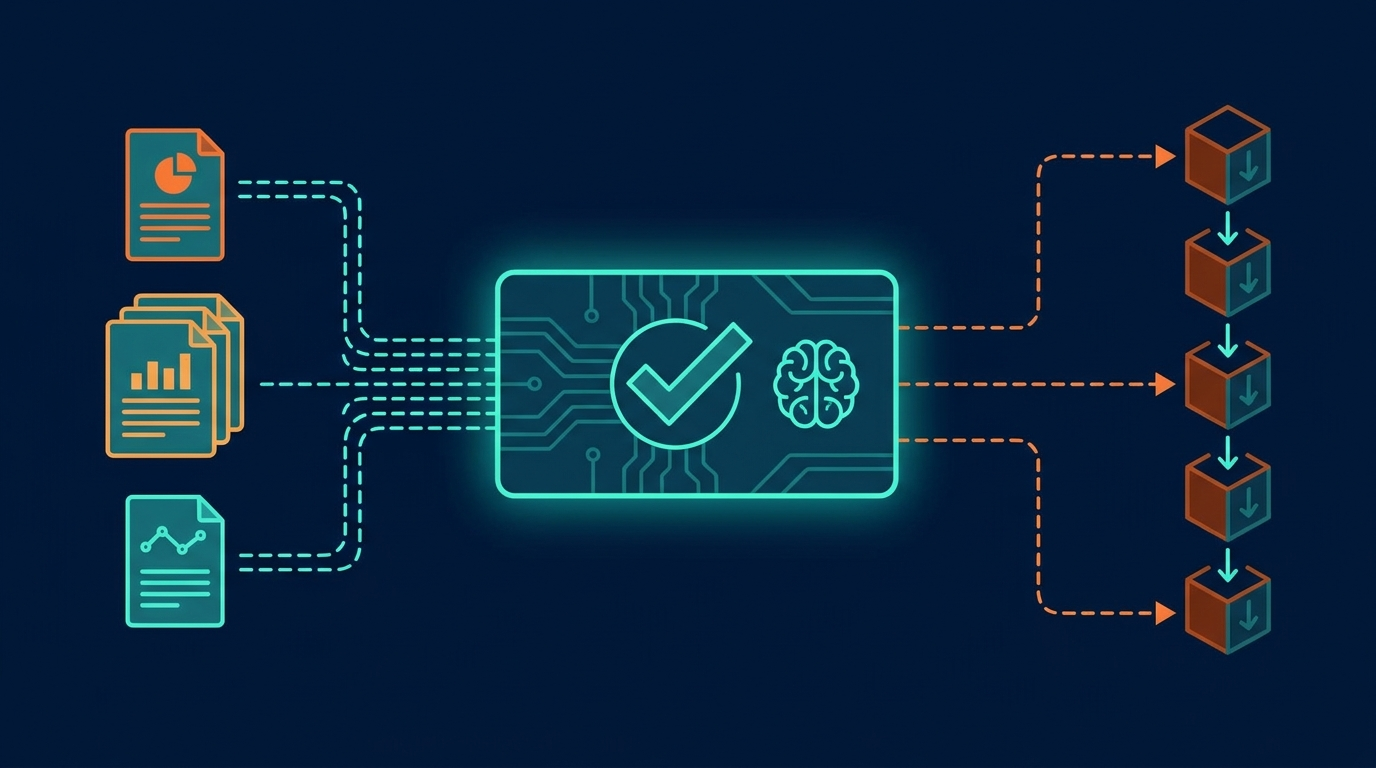
This is where governance by architecture changes the equation. The goal is not to discourage the worst failures but to make them structurally impossible, then to prove the fix held. Sovrinty is built as a governed knowledge layer for exactly this. Answers are compiled only from approved sources, and any sentence that lacks a citation is stripped before the answer is served, which closes the two failure classes red teams find most often: fabricated facts and unsupported claims. You can read how this works on the Sovrinty product page.
Make the highest-severity findings architecturally impossible
When approved-only retrieval and citation integrity are enforced in the architecture, a whole category of red team findings simply cannot recur. Attribute-based access control at the AI layer acts as a single, fail-loud choke point, so a user cannot coax the system into returning knowledge they are not cleared to see. Sovrinty treats sovereignty, zero-exfiltration, and access control as table stakes, described on the security page.
Prove the fix held
Detection without evidence does not survive an audit. Every answer carries its provenance, and history is versioned and never overwritten, so you can show a regulator exactly which approved source produced an answer and when a weak or outdated answer was pulled from circulation. Stale knowledge expires automatically through time-to-live rules and a daily job, rather than lingering until someone notices. That is the difference between saying a problem was fixed and proving it.
How to build an AI red teaming program
- Define scope and a threat model. Decide which systems, data, and abuse cases matter most, and write down the adversaries you actually care about.
- Assemble adversarial test cases. Combine known jailbreak and prompt injection patterns with scenarios specific to your domain and regulations.
- Run continuously, not once. Automate the core suite so it runs on every model swap, prompt change, and knowledge update.
- Route findings into governance. Feed each failure into the controls that prevent it, not just a ticket backlog, so the fix is structural rather than cosmetic.
- Re-test and keep the evidence. Confirm the fix, then retain the provenance and version history that proves it for auditors.
Red teaming is essential, but for regulated work it should feed a system that can prove every answer is grounded, current, and defensible, not just one that survived last quarter's test. See how Sovrinty governs AI knowledge by architecture, or book a demo to walk through provenance and audit-ready answers with our team.
FAQ
Common questions
What is AI red teaming?
AI red teaming is structured adversarial testing of an AI system. Testers deliberately attack a model with jailbreaks, prompt injection, and edge cases to surface failures like hallucination, data leakage, and bias so they can be fixed before deployment or audit.
How is AI red teaming different from penetration testing?
Penetration testing targets networks and software using known exploits. AI red teaming targets the model itself, its prompts, data, and outputs, using adversarial inputs to expose behavioral failures that traditional security testing does not look for.
Is AI red teaming required by the EU AI Act?
The EU AI Act requires adversarial testing and robustness evaluation for high-risk AI systems, which in practice means running a red teaming program. NIST and OWASP guidance point organizations in the same direction toward defensible, well-tested AI.
What failures does AI red teaming find most often?
The most common findings are hallucinations and unsupported claims, followed by prompt injection, data leakage, and biased or unsafe output. In knowledge work, a confident answer with no approved source behind it is usually the biggest risk.
Can AI red teaming stop hallucinations on its own?
No. Red teaming detects hallucinations but does not prevent them. Prevention comes from architecture, such as answering only from approved sources and stripping any sentence that lacks a citation, so the failure cannot recur.
How often should you red team an AI system?
Continuously. Because a model, prompt, or knowledge base can change at any time, an annual test is not enough. Automate a core suite that runs on every significant change and keep the evidence for audits.


