
Human in the loop AI is a design pattern where a person reviews, approves, or overrides an AI system's output before it takes effect. In regulated industries, it keeps accountability with a named human, catches errors automation would miss, and creates a decision point that auditors can inspect, question, and defend.
| OVERSIGHT MODEL | HUMAN ROLE | SPEED | BEST FIT |
|---|---|---|---|
| Human in the loop | Reviews and approves each output before it acts | Slower and gated | High-stakes regulated decisions |
| Human on the loop | Monitors and can intervene, but AI acts by default | Faster and supervised | Real-time or high-volume workflows |
| Human out of the loop | No routine review; AI acts autonomously | Fastest | Low-risk, reversible tasks |
Why human in the loop AI matters in regulated industries
In defense, financial services, and healthcare, an AI answer is not just a suggestion; it can drive a trade, a claim decision, or a clinical note. Regulators expect a named person to stay accountable for those outcomes. The EU AI Act makes this explicit: Article 14 requires high-risk AI systems to be designed so people can effectively oversee them, understand the output, and intervene or halt the system. The NIST AI Risk Management Framework likewise treats human oversight as a core control, not an optional add-on.
Human in the loop AI operationalizes that expectation. It converts an abstract accountability requirement into a concrete step: a person signs off before the output is used. But a signature only means something if the reviewer can see what they are approving and why, which is where many implementations quietly fail.
Human in the loop vs human on the loop
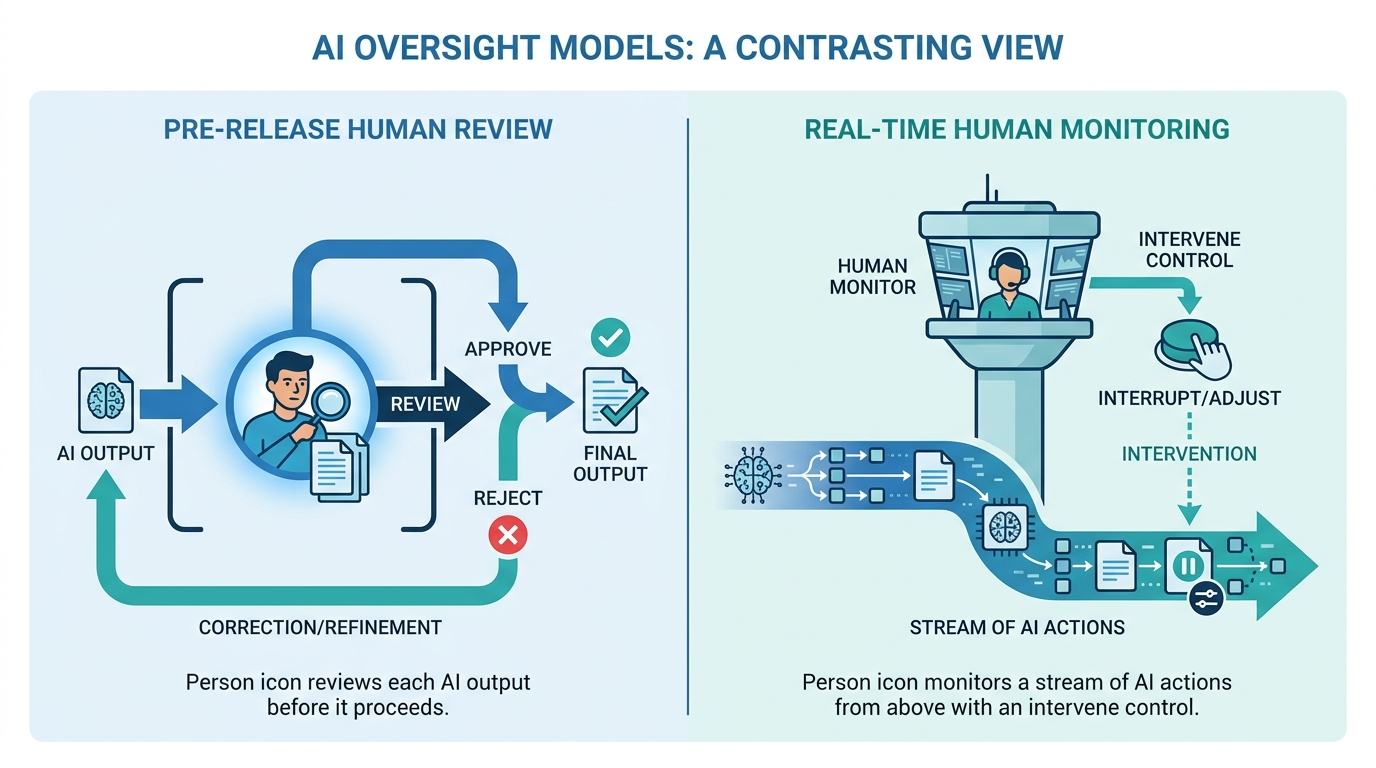
These two models are often confused, and the difference matters for both risk and throughput. In a human in the loop model, the AI cannot act until a person approves each output; the human sits inside the decision path. In a human on the loop model, the AI acts by default and a person supervises, stepping in only to correct or stop it; the human sits above the path, not inside it.
Neither model is universally correct. High-stakes, low-volume decisions, such as approving a regulatory filing, favor human in the loop. High-volume, time-sensitive workflows, such as fraud monitoring in financial services, often favor human on the loop with strong alerting. Many regulated teams run a hybrid: human in the loop for the few decisions that carry legal or safety weight, and human on the loop for the rest.
Where human in the loop AI breaks down
Adding a human reviewer looks like governance, but the checkpoint is only as good as the information behind it. Two failures are common.
Reviewers cannot see the source
When an AI system returns an answer without showing where each claim came from, the reviewer is approving a conclusion, not evidence. Under time pressure this becomes rubber-stamping: the reviewer trusts a fluent answer they cannot verify. Provenance, the ability to link every statement back to the document and passage it came from, is what turns a review into a defensible decision.
Approved once, silently stale
A human approves an answer today based on a policy that changes next quarter. Without a way to expire and pull outdated knowledge from circulation, the approved answer keeps being served long after it stopped being correct. Gartner forecasts that through 2026, 60 percent of enterprise AI projects will be abandoned for lack of AI-ready data, and stale, unverifiable knowledge is a large part of why. Governed knowledge should expire on a schedule, get flagged when its source changes, and be retired automatically rather than waiting for someone to notice.
How to make human in the loop AI audit-ready
To make oversight provable rather than cosmetic, and to satisfy standards such as ISO/IEC 42001, regulated teams should insist on a few structural properties:
- Answers are grounded only in approved sources, with unsupported sentences removed before a reviewer sees them, so the human reviews evidence rather than fluent guesswork.
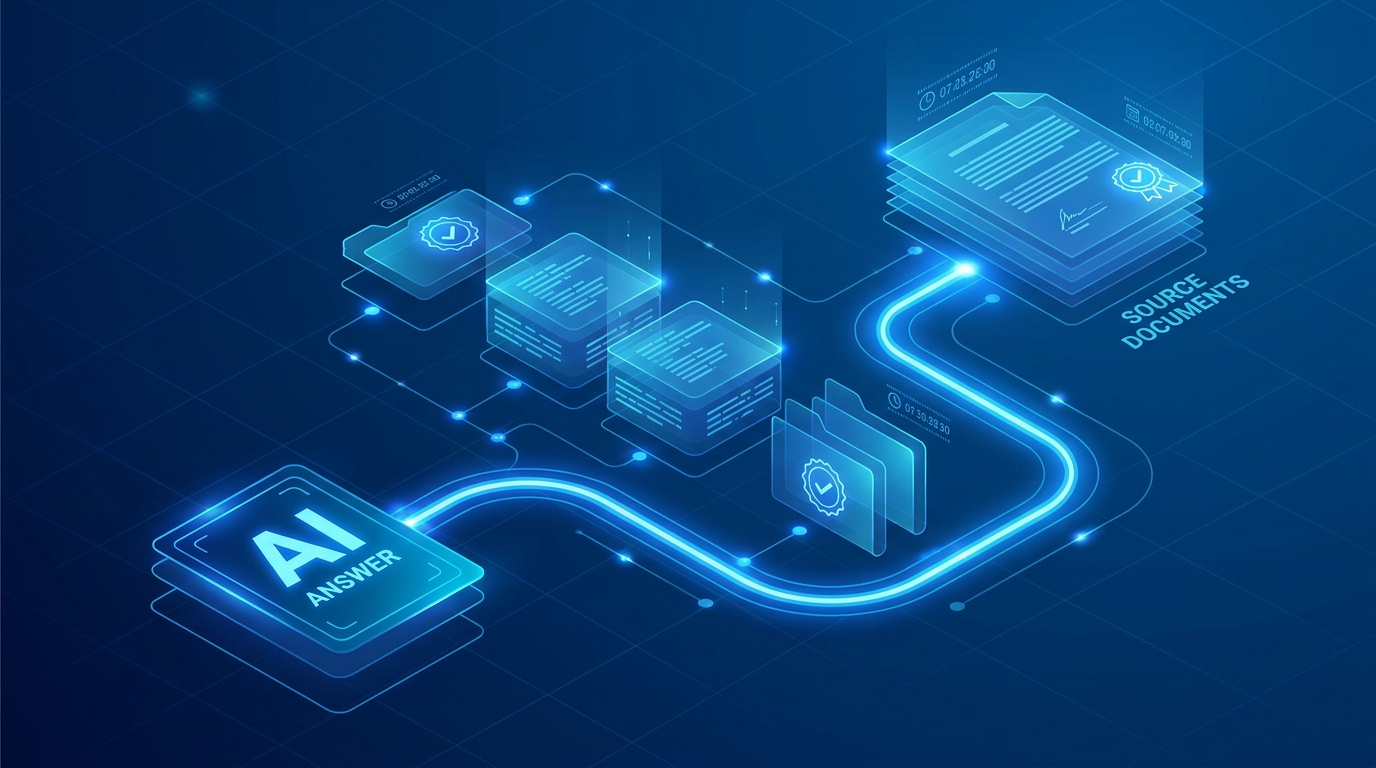
- Every answer is traceable to its source document and passage, so approval is a judgment on evidence, not on tone.
- Access is enforced at the AI layer with attribute-based access control, so reviewers and users only see what they are cleared to see.
- Knowledge expires and is pulled from circulation when it goes stale, so an approval does not outlive the facts behind it.
- Every review, approval, and override is written to an audit trail a regulator can inspect.
This is the difference between a human clicking approve and an organization that can prove, months later, who approved what, on what evidence, and under which policy. Sovrinty is built around that model: a governed knowledge layer where answers are grounded in approved sources, traceable to their origin, access-controlled at the AI layer, and logged for audit, so human oversight produces evidence you can defend.
If your teams already put humans in the loop but cannot prove what those humans approved, the oversight will not survive scrutiny. See how Sovrinty makes human in the loop AI traceable and defensible: request a demo.
FAQ
Common questions
What is human in the loop AI?
Human in the loop AI is a design where a person must review and approve an AI system's output before it is used or acted on. It keeps a named human accountable for the decision and creates an auditable checkpoint.
What is the difference between human in the loop and human on the loop?
In human in the loop, the AI cannot act until a person approves each output. In human on the loop, the AI acts by default and a person supervises and can intervene. The first suits high-stakes decisions; the second suits high-volume, time-sensitive workflows.
Does the EU AI Act require human oversight?
Yes. Article 14 requires high-risk AI systems to be designed so people can effectively oversee them, understand the output, and intervene or stop the system.
Why does human in the loop AI fail without provenance?
Because a reviewer who cannot see where an answer came from is approving a conclusion, not evidence. Without traceability to an approved source, oversight becomes rubber-stamping.
Is human in the loop AI enough for compliance?
Not on its own. Oversight holds up in an audit only when the reviewer sees grounded, source-traceable answers, access is controlled at the AI layer, stale knowledge is retired, and every approval is logged.
When should you use human in the loop versus agentic AI?
Use human in the loop for decisions that carry legal, financial, or safety weight, where a person must approve before action. Reserve more autonomous or agentic patterns for lower-risk, reversible tasks, with monitoring and the ability to intervene.


