
ISO/IEC 42001 is the first international standard for an artificial intelligence management system, or AIMS. Published in December 2023, it gives organizations a certifiable framework to govern how AI is built, deployed, and monitored, spanning risk assessment, data quality, transparency, and human oversight across the entire AI lifecycle.
| FRAMEWORK | TYPE | CERTIFIABLE | LEGALLY BINDING | PRIMARY FOCUS |
|---|---|---|---|---|
| ISO 42001 | Management system standard | Yes, via third-party audit | No, voluntary | Organization-wide AI governance |
| EU AI Act | Regulation and law | No | Yes, across the EU | Risk-tiered obligations for AI systems |
| NIST AI RMF | Voluntary framework | No | No | Risk identification and mitigation |
What ISO 42001 requires
ISO 42001 does not certify an individual model or product. It certifies the management system an organization uses to govern AI, much as ISO 27001 certifies an information security management system rather than a single application. Published by ISO/IEC, the standard follows the familiar plan-do-check-act cycle and expects leadership commitment, defined roles, documented policies, and continual improvement.
The ISO 42001 requirements cluster around a few core obligations. Organizations must run an AI risk assessment and an AI system impact assessment that weighs effects on individuals and society, not only on the business. They must establish data governance covering the quality, provenance, and appropriate use of training and operational data. They must document how systems work, offer transparency to affected people, and keep humans in the loop wherever decisions carry material consequences. Annex A lists reference controls and Annex B gives implementation guidance, so teams start from concrete practices rather than abstract principles.
ISO 42001 vs the EU AI Act and NIST AI RMF
Teams often ask whether ISO 42001 duplicates other AI rules. It does not. The three most cited frameworks solve different problems and work best together. The EU AI Act is binding law with risk-tiered obligations and heavy penalties, while ISO 42001 is a voluntary, certifiable management system that helps you demonstrate the governance the law assumes you already run. The NIST AI Risk Management Framework is a voluntary catalog of risk practices with no certification path. Many regulated organizations use NIST to structure risk work, ISO 42001 to certify the surrounding system, and map both to specific obligations; see our EU AI Act compliance guide and NIST AI RMF breakdown for how each fits.
How to get ISO 42001 certification
Certification is a staged process, and most organizations reach it in six to twelve months depending on how mature their AI practices already are. An accredited certification body, not ISO itself, issues the certificate after a two-stage audit.
The typical path
1. Gap analysis. Compare current AI practices against the standard's clauses and Annex A controls to see where the management system falls short.
2. Build the management system. Write policies, assign ownership, and stand up the risk assessment and AI impact assessment process.
3. Operate and collect evidence. Run the system long enough to generate the records an auditor can inspect.
4. Internal audit and management review. Find and close nonconformities before the external auditor arrives.
5. Stage 1 and Stage 2 audits. An accredited certification body reviews your documentation, then tests the system in practice.
6. Surveillance and recertification. Annual audits keep the certificate live, with full recertification every three years.
Why ISO 42001 matters for regulated industries
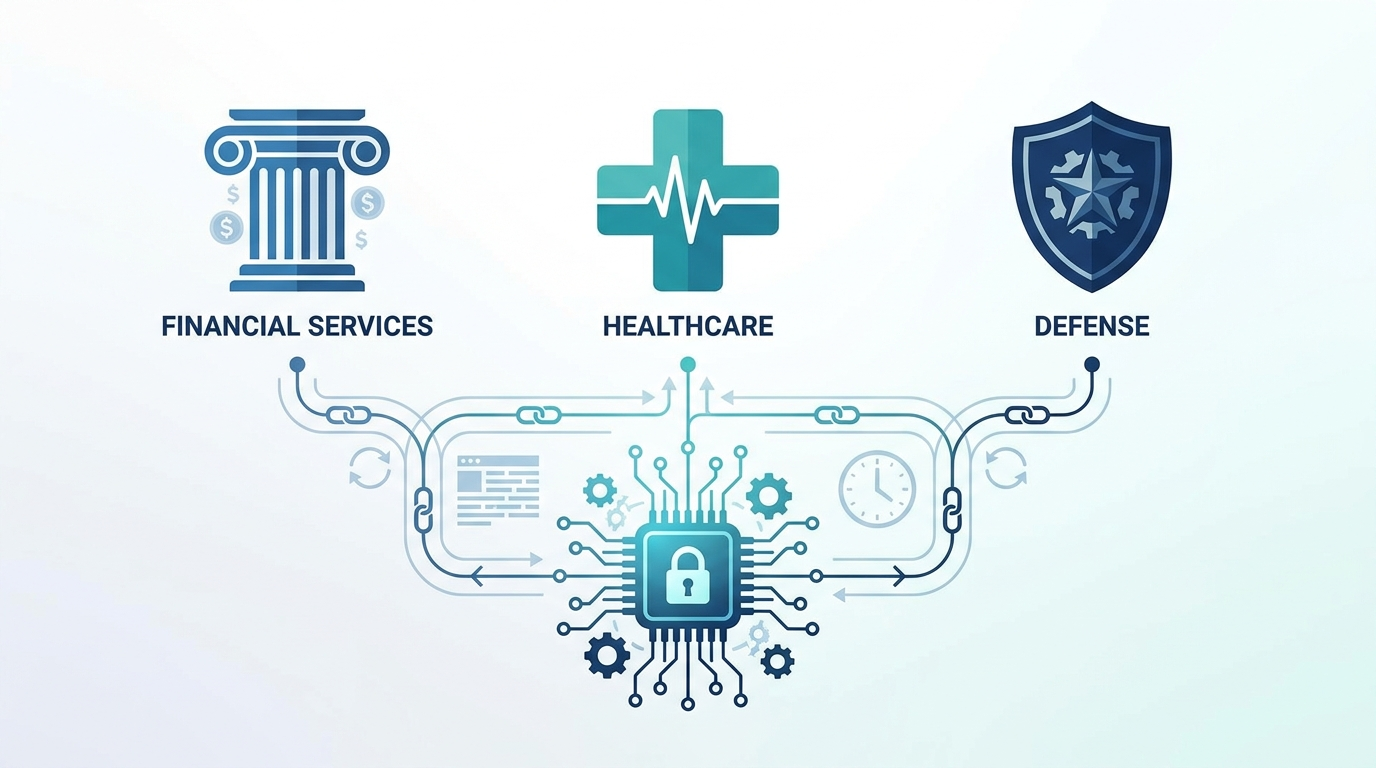
For pharma, financial services, healthcare, legal, and defense, ISO 42001 is fast becoming the shorthand buyers and regulators use to ask a blunt question: can you prove your AI is governed? Gartner forecasts that 60% of enterprise AI projects will be abandoned through 2026 for lack of AI-ready data, and the EU AI Act carries penalties up to EUR 35 million or 7% of global turnover. A certified management system will not erase those risks by itself, but it gives procurement teams, auditors, and boards an independently verified basis for trust. That is why governed AI belongs in every regulated workflow, from clinical evidence to financial disclosures across our industry solutions.
From ISO 42001 policy to provable AI governance
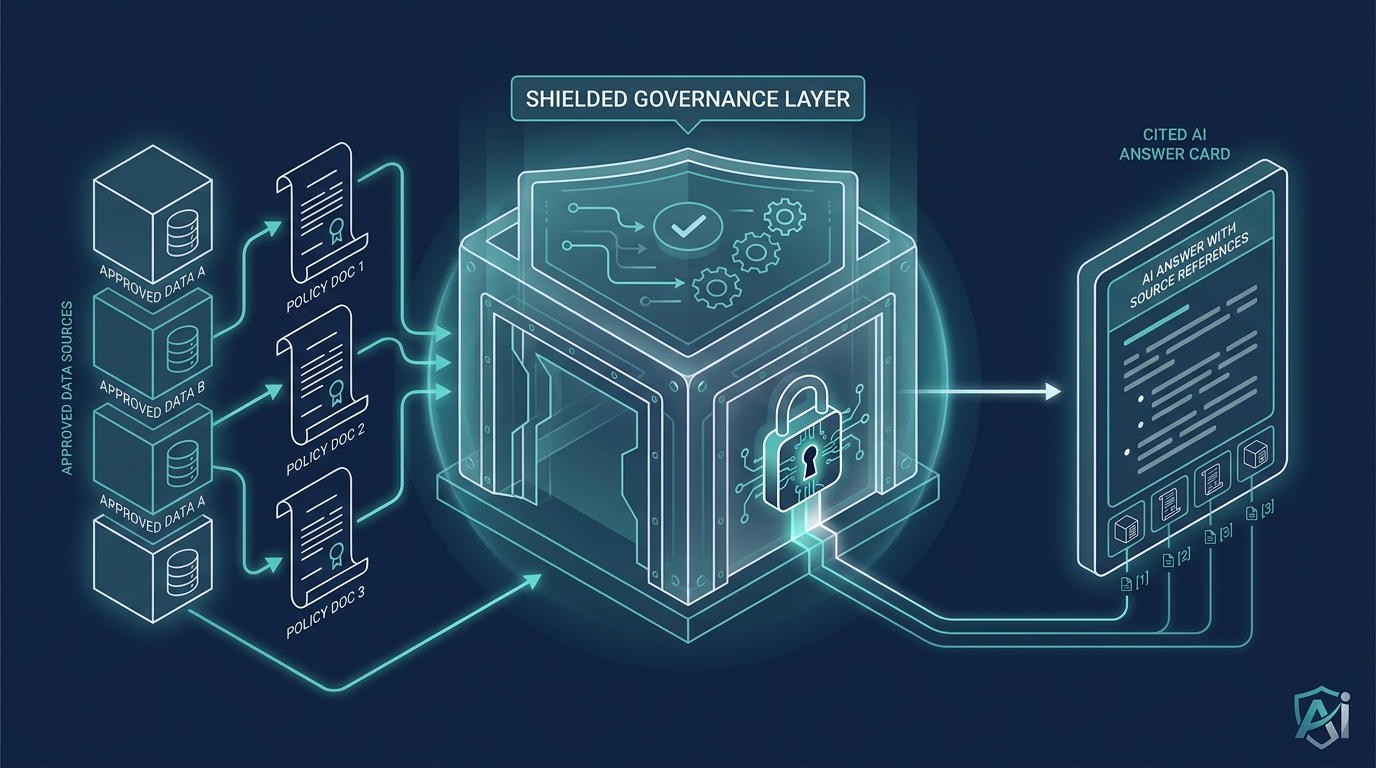
The hard part of ISO 42001 is not writing the policy; it is proving, on any given day, that the policy held. Most AI knowledge stacks store documents and generate answers, yet cannot show which approved sources an answer drew from, or whether those sources were still current when it was served. That gap is where audits stall and confidence erodes.
This is the failure mode Sovrinty is built to remove. Rather than treat governance as a settings page, Sovrinty puts it in the architecture. Answers are composed only from approved sources, sentences without a citation are stripped before the answer is served, and knowledge that has expired is pulled from circulation automatically by a scheduled job rather than lingering as a silent stale citation. Provenance is versioned and hashed, so every answer traces back to a source you can defend, and attribute-based access control sits at the AI layer as a single, fail-loud checkpoint. None of that replaces an ISO 42001 program, but it turns the standard's demands for data governance, transparency, and traceability into behavior your own logs can evidence.
If you are pursuing ISO 42001, or simply fielding tougher buyer questions about how your AI is governed, see what it looks like when governed, cited, current, and provable answers are the default. Book a demo with Sovrinty.
FAQ
Common questions
Is ISO 42001 certification mandatory?
No. ISO 42001 is a voluntary standard, but regulators and enterprise buyers increasingly treat certification as evidence that your AI governance is real, so it is becoming a practical requirement in regulated markets.
What is the difference between ISO 42001 and the EU AI Act?
The EU AI Act is binding law with risk-tiered obligations and penalties, while ISO 42001 is a voluntary, certifiable management system standard that helps you demonstrate the governance the law expects. They complement each other rather than overlap.
How long does ISO 42001 certification take?
Most organizations reach certification in six to twelve months depending on existing maturity, followed by annual surveillance audits and full recertification every three years.
Who needs ISO 42001?
Any organization that builds or deploys AI and must prove responsible governance, especially regulated sectors such as pharma, financial services, healthcare, legal, and defense.
Does ISO 42001 replace ISO 27001?
No. ISO 27001 governs information security while ISO 42001 governs AI management. They share a similar structure and are often pursued together, but each certifies a different management system.
How does ISO 42001 relate to the NIST AI RMF?
The NIST AI Risk Management Framework offers voluntary risk practices with no certification, so many teams use it to structure risk work and then certify the surrounding management system against ISO 42001.


