
Model drift is the gradual decline in an AI system's accuracy as the world it was built on changes. In regulated environments it appears in two forms: statistical drift inside the model, and knowledge drift in the source documents the system retrieves, cites and repeats back to users as approved fact.
| DRIFT TYPE | WHAT CHANGES | HOW IT IS DETECTED | WHO OWNS THE FIX |
|---|---|---|---|
| Data drift | The distribution of incoming inputs moves away from the training data | Statistical tests on feature distributions | Machine learning engineering |
| Concept drift | The relationship between inputs and correct outputs changes | Accuracy tracked against freshly labelled data | Data science |
| Model drift | Live performance degrades against the model's validated baseline | Continuous monitoring and fixed benchmark evaluation | MLOps and model risk |
| Knowledge drift | Source documents are edited, expire or are quietly superseded | Content hashes, expiry dates and steward supersession records | Content stewards and compliance |
What Model Drift Means for Regulated AI
Every deployed model is a snapshot of a moment. It encodes the statistical shape of the data available when it was trained and the assumptions of the team that validated it. From the moment it goes live, the distance between that snapshot and the present starts growing. In a consumer recommendation engine, that distance costs click-through rate. In a bank, a hospital or a defense supplier, it costs you a finding.
Supervisors named the problem long before generative AI arrived. The Federal Reserve's SR 11-7 guidance on model risk management requires ongoing monitoring to confirm a model is still performing as intended. The NIST AI Risk Management Framework treats continuous measurement as a core function rather than an optional extra. And the EU AI Act requires a post-market monitoring plan covering the operational life of a high-risk system. None of that is satisfied by a one-time validation report filed at go-live.
Why Model Drift Is Only Half the Problem
Most of the model drift literature was written for predictive models: credit scoring, churn, fraud detection. The failure mode there is statistical, so the remedy is statistical. Retrain on fresher data and the gap closes.
Retrieval-based systems break that assumption. When a language model answers a compliance question by retrieving your own policy documents, its accuracy stops being mainly a property of the model. It becomes a property of the documents. A perfectly stable model, with no measurable statistical drift at all, will confidently produce a wrong answer the day your retention policy changes and nobody updates the source behind it.
Retrieval does not stop the clock
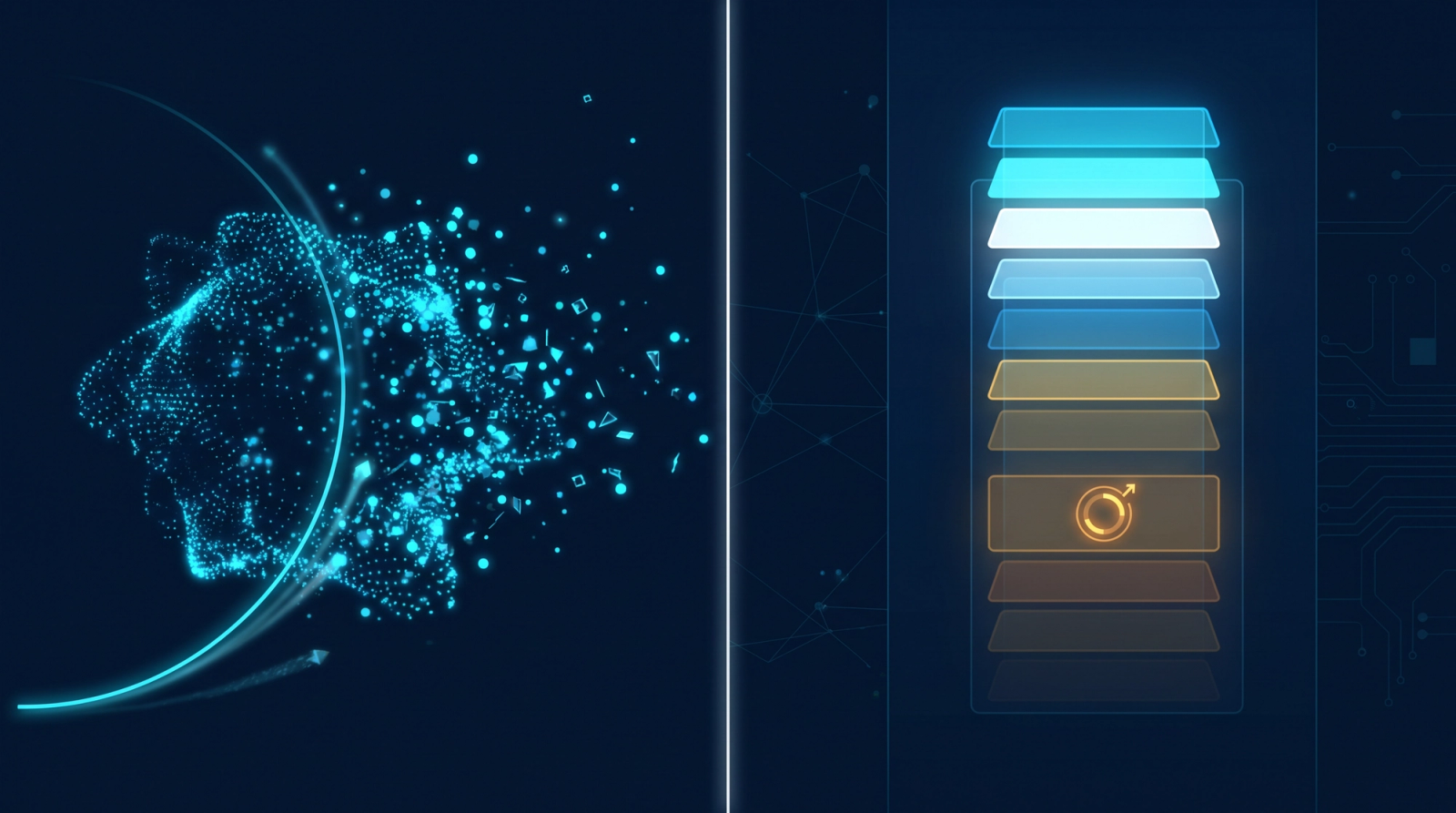
Grounding an answer in a document proves where the answer came from. It does not prove the document is still correct. Retrieval is optimised for relevance, not for currency, and a superseded procedure often scores as more relevant than its replacement simply because it has been in the corpus longer and matches more phrasings. This is the gap a governed knowledge layer is built to close. Answers cite approved sources, sentences that cannot be traced to one are removed before serving, and knowledge that has passed its review date is pulled from circulation automatically instead of waiting for someone to notice.
Static content is not the same as stable content
Teams often assume an internal knowledge base is low risk because nobody edits it. The opposite is closer to the truth. An untouched document in a moving regulatory environment is drifting faster than one under active review; it just does not announce it. Content hashes surface when a source has changed underneath an answer, and stewards record supersession so a replacement is linked to what it replaced. Currency is part of what makes data usable at all: Gartner projects that through 2026, organizations will abandon 60% of AI projects unsupported by AI-ready data. Stale is one of the ways data stops being AI-ready.
How Model Drift Detection Works in Practice
Monitor the inputs
Track the distribution of incoming requests against the distribution the system was validated on. Population stability index, Kolmogorov-Smirnov tests and plain category-frequency comparisons all do the job. Input monitoring is cheap and catches the largest class of problems early, because the questions people ask usually shift before answer quality visibly degrades.
Evaluate against a frozen benchmark
Maintain a fixed set of questions with reviewed correct answers and run it on a schedule. For retrieval systems, the benchmark should assert the expected source as well as the expected answer, so a response that happens to be right for the wrong reason still fails. This is the only method that catches statistical drift and knowledge drift in the same test.
Instrument the humans
Reviewer overrides, escalations and support tickets are drift signals with a lag measured in hours rather than quarters. Route them into the same surface as your statistical metrics. A cluster of corrections on one topic is usually a stale source rather than a degraded model, and treating it as a retraining problem sends the fix to the wrong team.
Governing Knowledge Drift at the Source
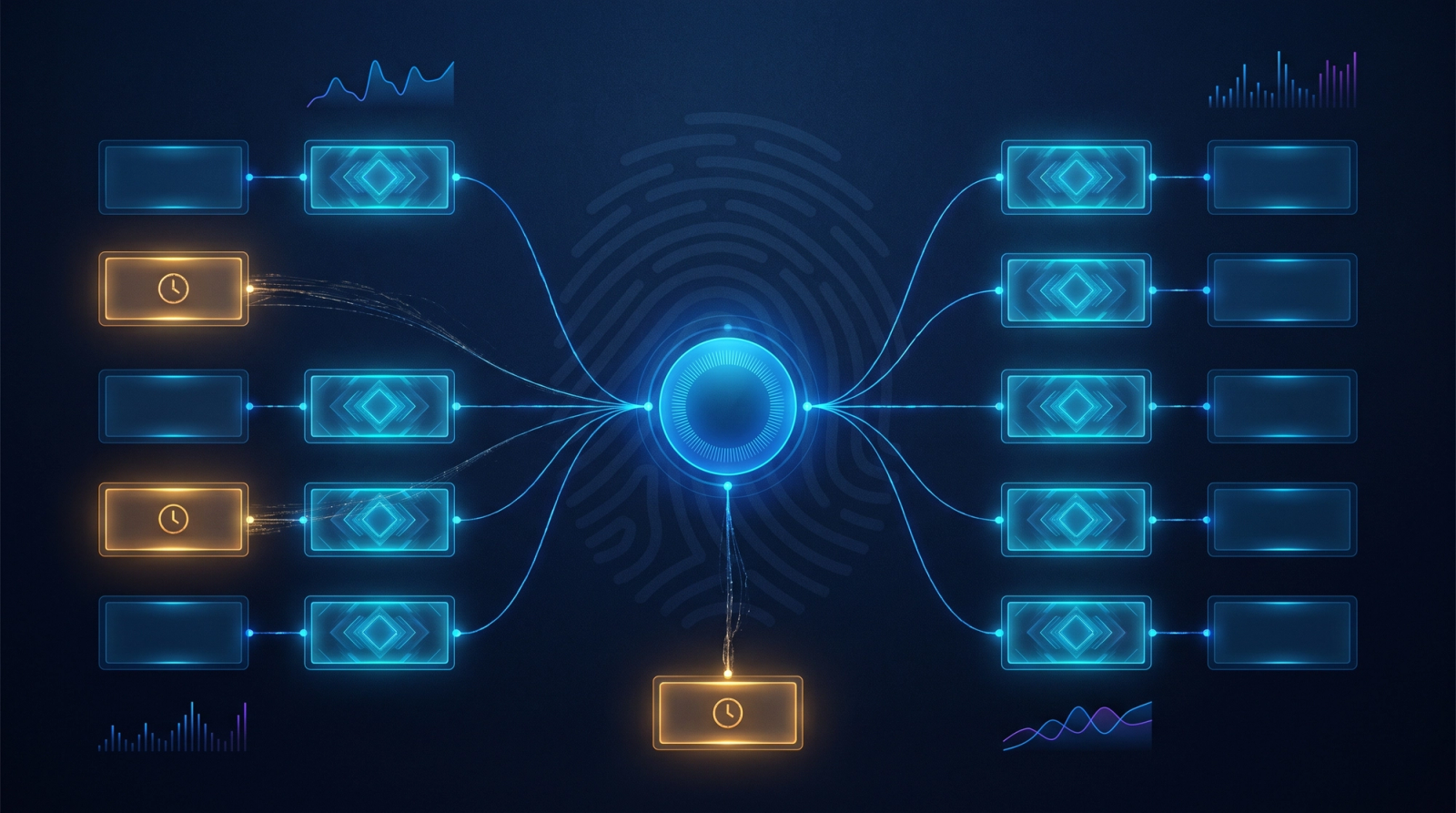
Detection tells you a problem exists. Governance decides what happens next, and that turns out to be an architecture question more than a policy question. The controls worth building into the knowledge layer itself:
- Expiry by default. Every approved item carries a review date. When that date passes, the item leaves the answerable set until a steward renews it.
- Recorded supersession. When knowledge is replaced, the steward records what replaced it, so the old version is retired rather than left sitting alongside the new one.
- Drift detection on sources. Content hashes make silent edits visible, so a document that changed after approval can be flagged for re-review.
- Currency on the citation. Citations carry stale flags, so the reader sees the age and status of the evidence rather than having to trust that someone checked.
- Named ownership. Unowned content cannot be recertified. Every approved item needs a steward who is accountable for its accuracy on a defined cycle.
What Regulators Actually Ask You to Show
When an examiner picks apart an AI-generated answer, the question is rarely whether your model is accurate in aggregate. It is narrower and much harder: what did this system say, on what date, based on which version of which source, and who approved that source. That is a provenance question, and a model monitoring dashboard cannot answer it after the fact. Regulated teams in financial services that record the source version behind each answer can reconstruct that chain on request. Teams that log only the prompt and the completion cannot. The difference never shows up in an accuracy metric. It shows up the first time you are examined.
Designing for Model Drift From the Start
Drift is not a defect to be engineered away. It is the expected behaviour of any system that models a world which keeps moving. The design goal is not a system that never drifts; it is a system in which drift is visible, bounded and attributable to something you can fix.
In practice that means treating the knowledge layer as a governed asset with the same rigour you apply to the model: versioned, owned, expiring and monitored. It means deployment choices that keep both the model and the corpus inside your control boundary, whether that is on-premise, in a sovereign cloud or in an air-gapped enclave. And it means being able to produce the evidence chain on demand rather than assembling it under a deadline set by someone else.
Sovrinty gives regulated teams a governed knowledge layer where answers cite approved sources, unsourced sentences are removed before serving, expired knowledge is pulled from circulation automatically and every citation carries its own currency, across whichever model you choose to run. To see how it handles drift against your own documents and controls, request a demo.
FAQ
Common questions
What is model drift?
Model drift is the gradual decline in an AI system's accuracy as conditions move away from those it was built and validated on. It covers changes in the input data, changes in the relationship between inputs and correct outputs, and, for retrieval-based systems, changes in the source documents behind each answer.
What is the difference between data drift and model drift?
Data drift is a change in the inputs; model drift is the resulting drop in live performance against the validated baseline. Data drift is a cause and model drift is the effect, which is why input monitoring usually gives you earlier warning than output monitoring alone.
How do you detect model drift?
Combine three methods: statistical comparison of live input distributions against the validation set, scheduled evaluation against a frozen benchmark of questions with reviewed answers, and monitoring of human signals such as reviewer overrides and escalations.
Does retrieval augmented generation prevent model drift?
No. Retrieval reduces reliance on the model's training data but introduces dependence on the document corpus, which drifts on its own schedule. A stable model retrieving an outdated policy will produce a wrong answer with full confidence and a valid-looking citation.
How often should AI systems be monitored for drift?
Input distribution monitoring should run continuously because it is cheap. Benchmark evaluation typically runs weekly or monthly depending on risk tier. Knowledge review cycles should be driven by the expiry date attached to each source rather than by a single calendar cadence for the whole corpus.
Why does model drift matter more in regulated industries?
Because the consequence is not a worse recommendation, it is a defensibility failure. Supervisory expectations such as SR 11-7 and the EU AI Act's post-market monitoring duties assume you can show that a system is still performing as validated, and that you can trace a specific answer back to an approved source version.


