
AI observability is the practice of continuously monitoring an AI system so its behavior, inputs, and outputs stay visible, measurable, and explainable in production. In regulated industries, governed AI observability adds a further layer: it records where every answer came from, which data version produced it, and who was permitted to see it.
Most AI observability tools were built for reliability engineering. They answer questions like is the model slow, is it drifting, and is it erroring. Those questions matter, but in defense, financial services, and healthcare they are not the questions an auditor asks. An auditor asks which source produced this answer, was the underlying data current, and was the person who received it cleared to see it. The table below shows where the two approaches diverge.
| CAPABILITY | TRADITIONAL AI OBSERVABILITY | GOVERNED AI OBSERVABILITY |
|---|---|---|
| Primary goal | Detect performance and reliability issues | Prove and control every answer |
| Core signals | Latency, tokens, drift, error rates | Provenance, access, staleness, policy |
| Audit output | Dashboards and alerts | Immutable per-answer audit trail |
| Access model | Team or service level logging | ABAC enforced at the AI layer |
| Compliance value | Operational insight | Evidence a regulator will accept |
Why traditional AI observability falls short
A latency dashboard cannot tell a compliance officer whether a generated answer was based on an approved, current document or a stale draft that should have been retired. That gap is not academic. Gartner forecasts that 60 percent of enterprise AI projects will be abandoned through 2026 because the underlying data is not AI ready. Observability that ignores the data layer inherits that same weakness.
The staleness cascade
When a source document changes and the AI keeps answering from the old version, every downstream answer is quietly wrong. Traditional monitoring shows the model responding normally, because latency and error rates look fine. A staleness cascade is invisible to performance metrics and obvious to an auditor. Governed observability tracks the version of the data behind each answer, so a retired document stops producing answers the moment it is superseded.
The access blind spot
Performance tooling logs that a request happened, not whether the requester was entitled to the information returned. In regulated settings that distinction is the whole point. An answer built from records the user was never cleared to see is a breach, even if the system performed flawlessly. Observability has to include who asked, what they were allowed to access, and what the answer was actually assembled from.
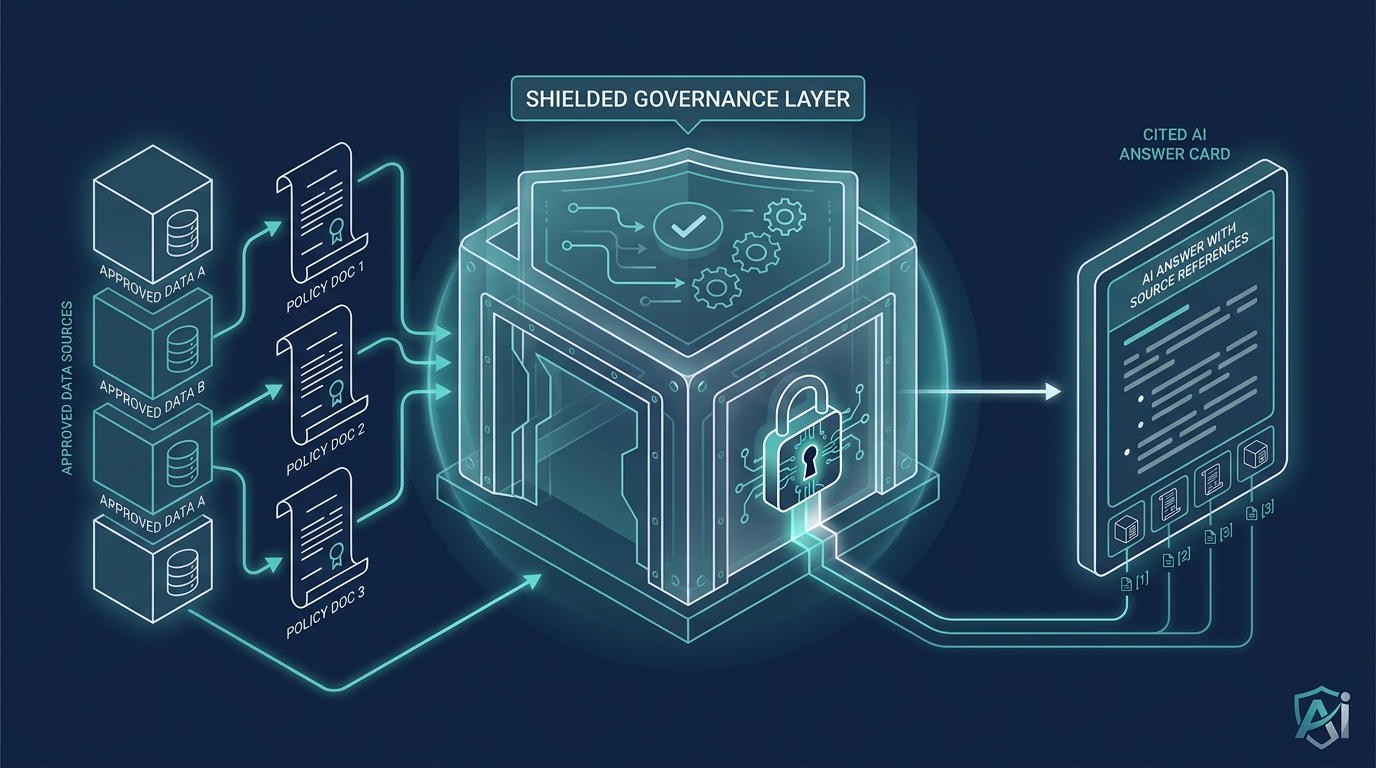
What governed AI observability tracks
Governed AI observability treats every answer as an auditable event. Instead of sampling traffic for performance trends, it captures the full lineage of each individual response: the sources it drew from, the version of each source, the access policy applied, and the identity that received it. Sovrinty records this as a Golden Spike, an immutable per-answer audit trail that ties a specific output to the exact evidence and permissions behind it.
This is the difference between an answer you can monitor and an answer you can prove. You can review how Sovrinty captures provenance and the Golden Spike audit trail on the product page, and how access is enforced with ABAC and zero-exfiltration controls on the security page.
Building AI observability into a regulated AI stack
Effective AI observability is designed in, not bolted on. Three principles keep it audit ready. First, capture provenance at generation time, not after the fact, so every answer carries its evidence with it. Second, enforce attribute based access control at the AI layer, so the same policy governs retrieval and response. Third, make the record immutable, so the audit trail cannot be edited after an answer is served. Because Sovrinty is model agnostic and supports bring-your-own-model, these controls hold whether you run a frontier model or a private one.
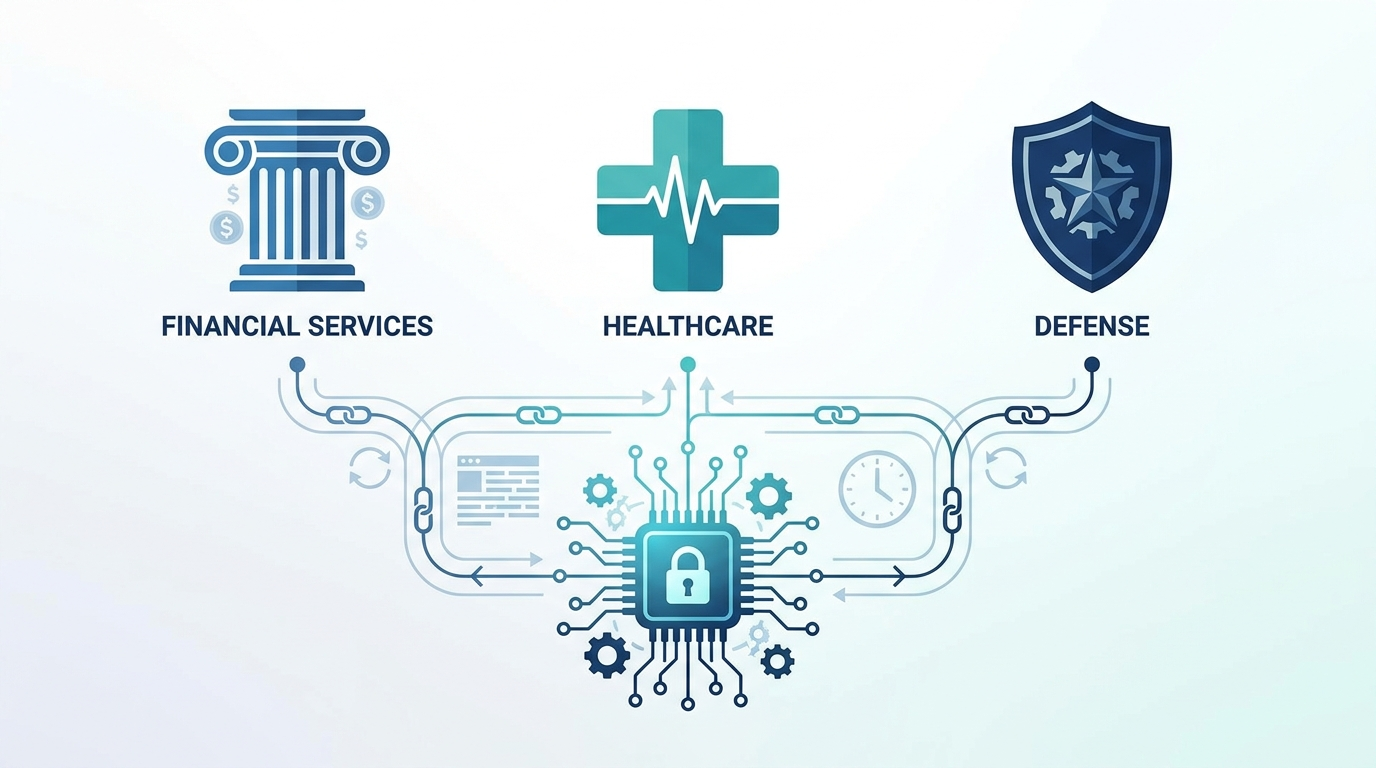
Standards bodies now expect this level of visibility. The NIST AI Risk Management Framework calls for AI systems to be measurable and accountable across their lifecycle, and ISO/IEC 42001 formalizes ongoing monitoring as part of an AI management system. Observability is how those requirements become operational rather than aspirational.
AI observability and regulatory compliance
Under the EU AI Act, providers of high-risk AI systems must maintain logging and traceability, and penalties reach up to EUR 35 million or 7 percent of global annual turnover. A per-answer audit trail turns a compliance obligation into a routine byproduct of how the system runs. When a regulator, customer, or internal reviewer asks how a decision was reached, the evidence already exists.
AI you can watch is table stakes. AI you can prove is the standard regulated industries are moving toward. If you want to see how governed AI observability produces answers your business can defend, request a Sovrinty demo.
FAQ
Common questions
What is AI observability?
AI observability is the continuous monitoring of an AI system so its inputs, behavior, and outputs are visible, measurable, and explainable in production. In regulated settings it also covers where each answer came from and who was allowed to see it.
How is AI observability different from AI monitoring?
AI monitoring focuses on operational health such as latency, drift, and errors, while AI observability aims to explain why a system produced a specific output. Governed observability goes further by proving the provenance and access behind each answer.
Why do regulated industries need governed AI observability?
Regulated industries must prove that each AI answer came from approved, current data and reached only authorized users. Performance dashboards cannot show that, so a per-answer audit trail is required for defensible compliance.
What signals should AI observability track?
Beyond latency and error rates, AI observability should track data provenance, the version of each source, the access policy applied, and the identity that received each answer. These signals expose staleness and access issues that performance metrics miss.
Does AI observability support EU AI Act compliance?
Yes. The EU AI Act requires logging and traceability for high-risk AI systems, and an immutable per-answer audit trail provides the record regulators expect. It turns traceability into a byproduct of normal operation.
Can AI observability work with any model?
Yes. A model-agnostic, bring-your-own-model approach applies the same provenance and access controls whether you run a frontier model or a private one, so observability does not depend on a single vendor.


